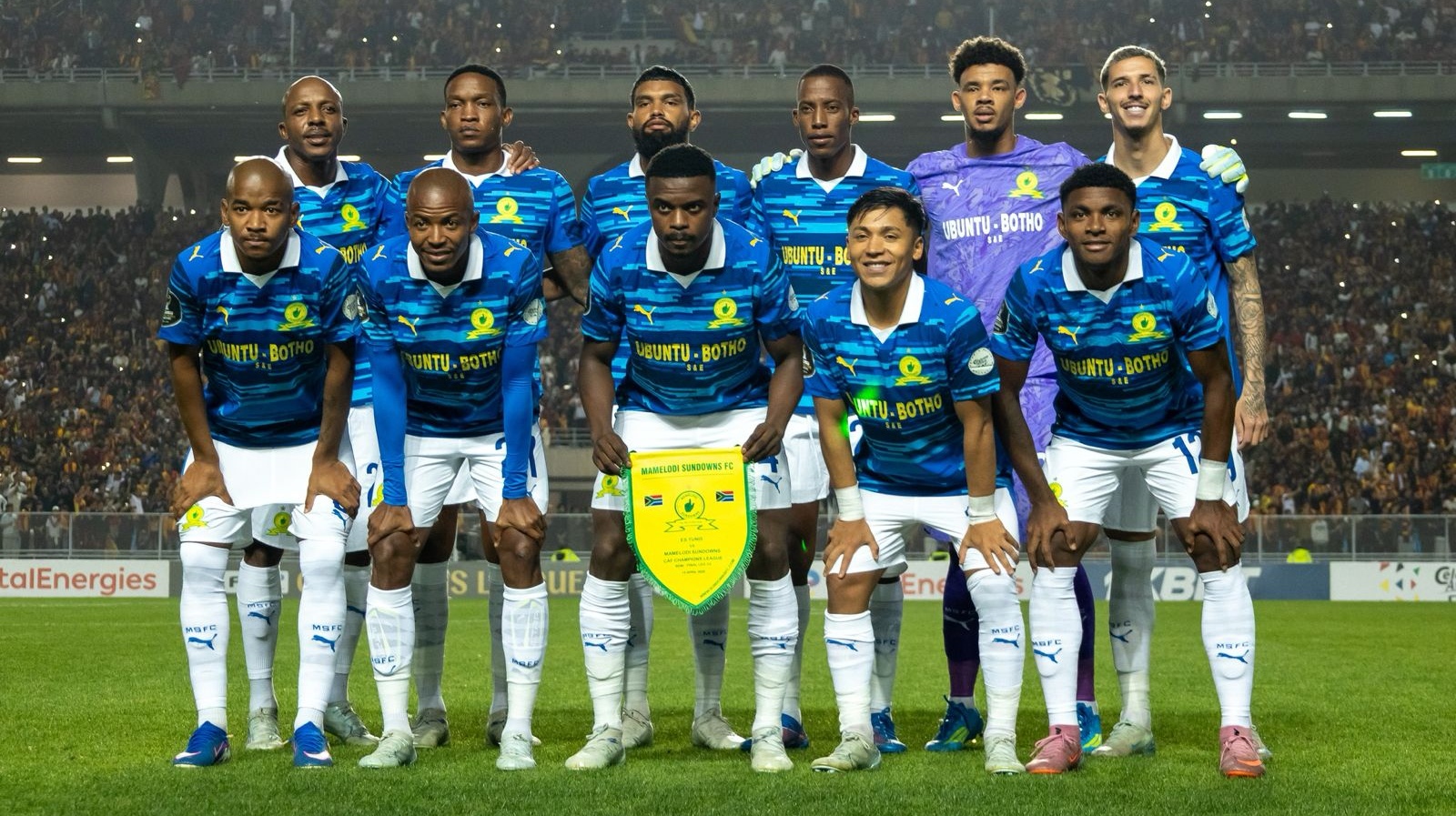
Martin T
May 16, 2026OPINION: The Paranoia of the privileged: Why Miguel Cardoso’s ‘spying’ claims don’t hold water
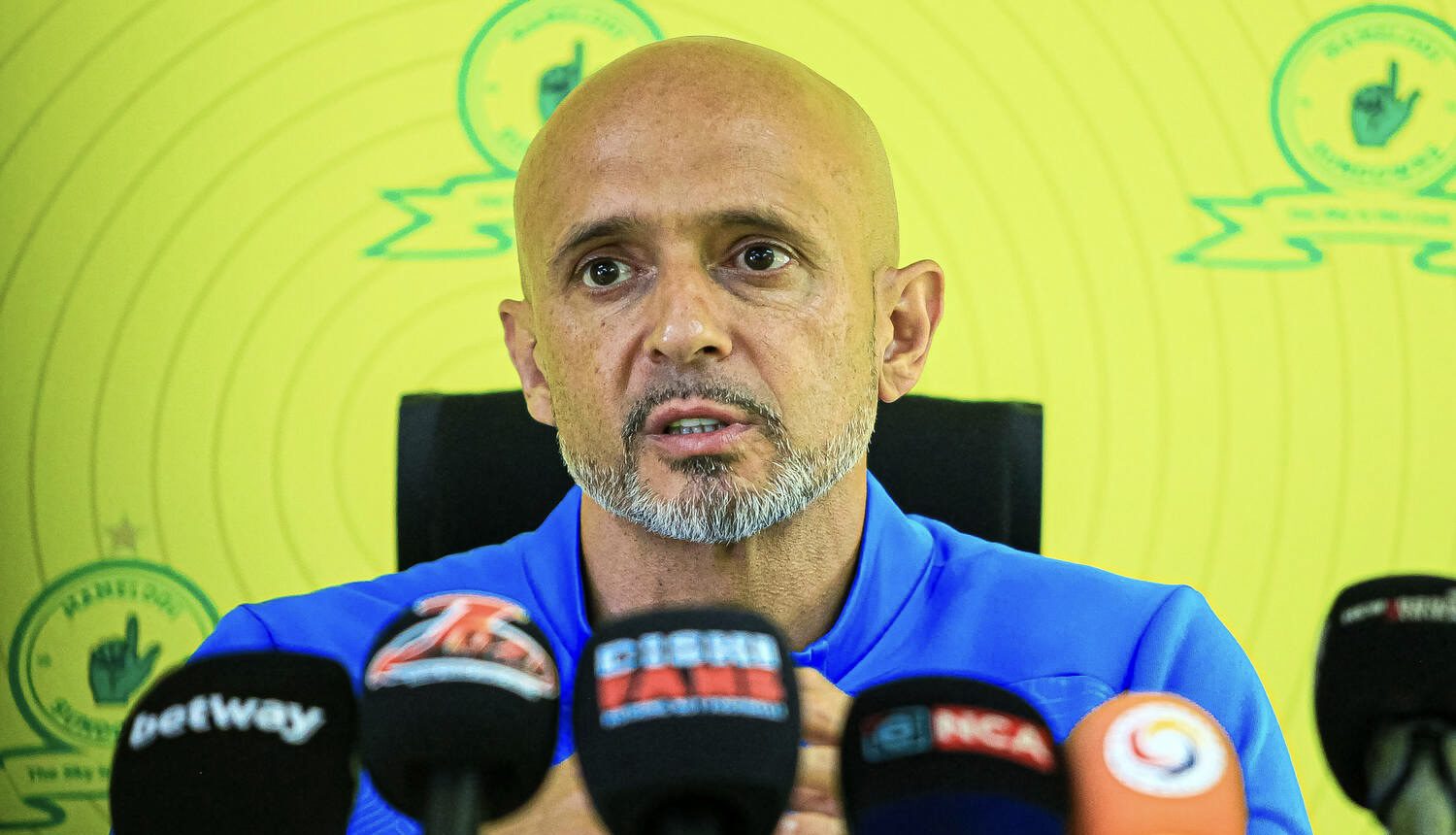
Miguel Cardoso. Photo credit: Mamelodi Sundowns
OPINION: The Paranoia of the privileged: Why Miguel Cardoso’s ‘spying’ claims don’t hold water
In the high-stakes, hyper-analytical theatre of modern African football, tactical secrecy is often treated with the same reverence as the crown jewels. But there is a thin, increasingly frayed line between professional vigilance and outright paranoia. Mamelodi Sundowns head coach Miguel Cardoso seems to have crossed that line, or perhaps he’s simply decided to park his bus there.
Following his side’s chaotic 7-4 victory over Siwelele FC—a scoreline that suggests a coach should be more worried about his own defensive transition than a rival’s film study—Cardoso launched a scathing broadside against CAF Champions League final opponents, AS FAR.
His grievance? The Moroccan giants somehow got their hands on “wide-angle tactical footage” of Sundowns’ recent clash in the Betway Premiership with Kaizer Chiefs just 24 hours after the final whistle. The Portuguese mentor didn’t just hint at an advantage; he framed it as a betrayal, a breach of “fair play,” and a symptom of a lack of support for the Brazilians in their continental quest.
MIGUEL CARDOSO’S DESPERATE SEARCH FOR SCAPEGOATS
Let’s be clear: in 2026, complaining about an opponent obtaining video footage is like a chef complaining that a rival knows he uses salt. It is not “spying.” It is called professional scouting. For the uninitiated, a “wide-angle” or tactical feed is a static shot from a high vantage point that shows all 20 outfield players. It allows analysts to see the spacing between the lines—the “big picture” that the ball-tracking television cameras often miss. Every serious club in the world uses it. Every serious club in the world seeks it.
To suggest that AS FAR receiving this footage is “abnormal” is a staggering display of tactical naivety or, more likely, a calculated attempt to build a siege mentality. We live in an era of WyScout, Hudl, and FIFA’s own data platforms, where wide-angle footage of almost every significant professional match is available for download with a few clicks and a subscription fee. If AS FAR didn’t have that footage within 24 hours, they wouldn’t be a professional outfit; they’d be an amateur social club.
Cardoso’s claim that he “knows” because “someone saw” sounds less like a technical breakdown and more like a playground rumour. Whether the footage came from a SuperSport TV secondary feed, a scout in the stands with a tripod, or even a sympathetic ear at another local club, it doesn’t matter. It isn’t illegal, and it isn’t “unfair.” This is, unfortunately, becoming a tiresome pattern for the Sundowns coach.
Cast your mind back to February, when the club was rocked by allegations that a long-serving analyst, Mario Masha, was leaking information ahead of the clash with MC Alger. Cardoso’s predecessor, Rulani Mokwena, was the target of those whispers. The analyst was suspended and eventually dismissed. Whether guilt was ever truly proven remains a mystery shrouded in the shadows of Chloorkop, but the precedent was set: when things get difficult, look for a leak.
Cardoso has spent much of this season seemingly at war with the very ecosystem that sustains him. He has bemoaned the standard of South African refereeing, which is a point where his concerns are actually fair. The lack of VAR in South Africa is a genuine hurdle; the game in this country needs it to grow and improve, and the league certainly has the financial muscle to afford it. Referees in the PSL continue to make shocking mistakes that leave observers wondering about the state of officiating, often resulting in officials being suspended after the damage is already done. In this specific regard, Cardoso is right to demand better.
However, the validity of his VAR complaints does not excuse his persistent habit of blaming the “heavy schedule” for every setback. Following a recent 3-2 defeat to TS Galaxy on May 12, 2026, Cardoso once again cited the taxing schedule as the primary reason for failure.
This defeat was nothing short of extraordinary. It marked the first time since February 2008—nearly two decades ago—that Sundowns have conceded three or more goals in back-to-back league games. The defensive fragility was evident from the whistle; it was only the 10th time in PSL history that the Brazilians have shipped two goals within the opening 18 minutes of a match. This came immediately after they let in four goals against Siwelele FC.
While Sundowns’ schedule has undoubtedly been gruelling, Cardoso speaks as if this is a burden unique to Chloorkop. It is not. This same schedule has affected Chiefs, Pirates, TS Galaxy, and Stellenbosch FC whenever they have participated in CAF competitions. Furthermore, his complaints about the quality of South African pitches ignore the fact that these surfaces affect every team in the league. These issues are not a conspiracy against Sundowns; they are the reality of the domestic landscape.
He recently pointed to a perceived disparity in venue selection, highlighting that Magesi FC took Sundowns to the smaller, more modest Seshego Stadium, while they hosted Orlando Pirates at the far more accommodating New Peter Mokaba Stadium. This narrative of a “disadvantage” is a central pillar of his siege mentality this season.
However, the logic falls apart under even the slightest scrutiny. While Cardoso lamented the trip to Seshego, both Kaizer Chiefs and Orlando Pirates were taken to the ageing and “poor” Old Peter Mokaba Stadium for their respective away fixtures against the Limpopo side this season.
Furthermore, the argument that high-end venues are a prerequisite for Sundowns to perform was completely dismantled this week. When the Brazilians were granted exactly what Cardoso seemingly prefers—a world-class venue like the spacious Mbombela Stadium for their clash against TS Galaxy—they still managed to lose. It appears that the venue only becomes a focal point when it serves as a convenient explanation for a poor result.
The most glaring flaw in Cardoso’s “calendar” defence is the historical success of his predecessors. Pitso Mosimane won the league title several times and even secured the CAF Champions League crown under these exact same conditions. Rulani Mokwena also navigated the same fixture congestion to win the league. In contrast, Cardoso is now on the verge of failing to win the league altogether. Orlando Pirates need just three points in their last two games to end Sundowns’ dominance. If the Buccaneers succeed, they will halt a streak where Sundowns have won the league for eight consecutive times. While Cardoso points at the schedule, Pirates have managed to stay within striking distance while Sundowns’ defensive structures have completely collapsed.
The Portuguese mentor has the advantage of a massive squad filled with millions of rands worth of quality players. He has the depth to rotate and the resources to recover, yet the narrative remains one of being “beaten by the calendar.” He famously stated to his peers in Europe that he has nothing positive to say about the South African league, yet he remains in the job, presiding over a historic defensive decline. He even alleged that PSL referees and club officials are involved in illicit night-time meetings before matches, citing “photos” he had seen but never produced. If the “standards” here are so beneath his European sensibilities, and if the “abnormal circumstances” are so taxing, one has to ask why he continues to manage in a league he seems to despise.
The irony is that Sundowns are, by every metric, the most supported and well-resourced club on the continent. They have the best travel arrangements and the deepest pockets. Yet, Cardoso persists in painting a picture of a team “fighting against everything.” By framing a standard scouting practice as a “shock claim” of espionage, he isn’t protecting his players; he’s providing them with a pre-packaged excuse. He is telling them that if they lose to AS FAR in the CAF Champions League final, it wasn’t because the Moroccans were better, but because the “system” conspired against them.
On May 17, when the whistle blows at 16:00 in Tshwane, the wide-angle video won’t matter. What will matter is whether Cardoso can organise a defence that has just leaked seven goals in two matches.
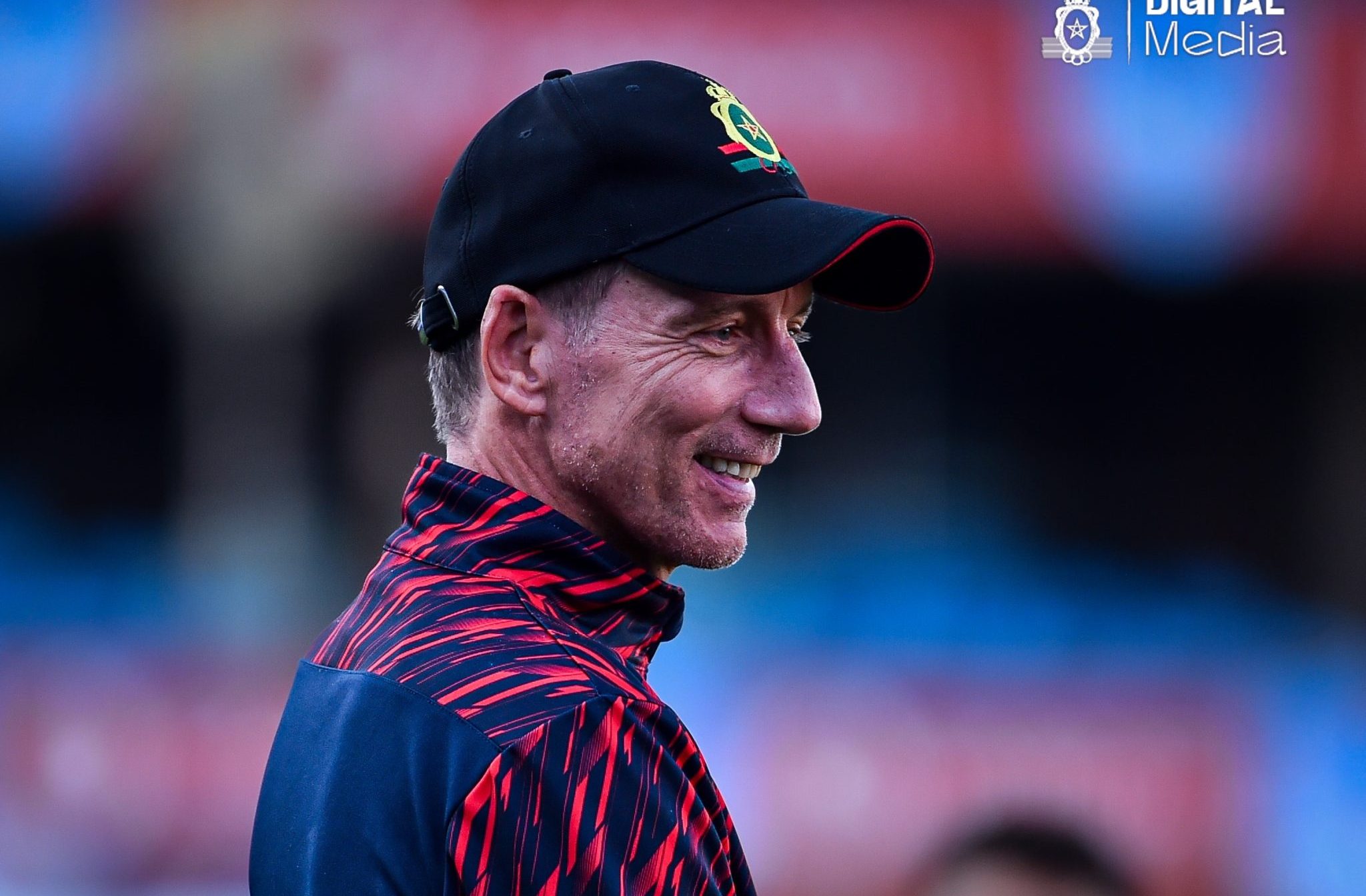
🇲🇦 𝐀𝐒 𝐅𝐀𝐑 𝐓𝐎𝐔𝐂𝐇 𝐃𝐎𝐖𝐍 𝐀𝐓 𝐋𝐎𝐅𝐓𝐔𝐒! 🏟️
The Moroccans side is in Pretoria!
AS FAR held their first training session at Loftus Versfeld Stadium this Friday afternoon.
With the CAF Champions League final first-leg tie scheduled for Sunday, the visitors are… pic.twitter.com/5ThAI6OVda
— Pan-Africa Football (@PanAfricaFooty) May 15, 2026
AS FAR didn’t need a secret video to see that the Brazilians have a soft underbelly; they just needed to watch the highlights of the Siwelele and Galaxy games. It is time for Cardoso to stop looking for spies in the press box and start looking for solutions on the training pitch. In the pressure of a final, resilience is born from performance, not from paranoia. If he is truly “strong enough to deal with everything,” he should start by dealing with the reality of modern football and the high standards set by those who sat in his chair before him. The calendar isn’t the enemy; the erosion of the club’s defensive standards under his watch is.