Andrew Olsson
January 17, 2026AFCON: An elegy for each of the 22 eliminated teams ahead of the final
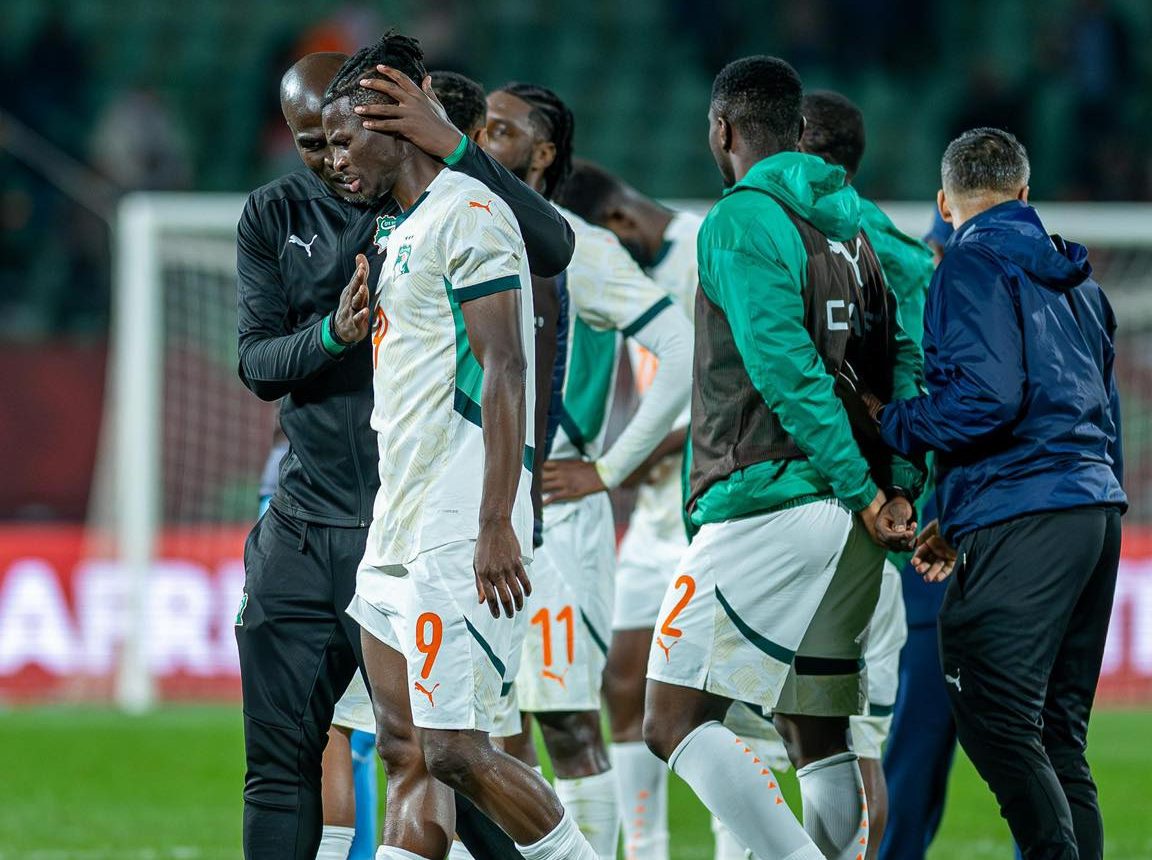
Ivory Coast forward Vakoun Issouf Bayo is comforted following his team's defeat to Egypt in the quarterfinals. Photo: Ivorian Football Federation
AFCON: An elegy for each of the 22 eliminated teams ahead of the final
The 2025 Africa Cup of Nations (AFCON) is approaching its conclusion when Sunday’s final teakes place between Senegal and hosts Morocco.
What a journey. It all comes down to this. 🏆
The #TotalEnergiesAFCON2025 final is set. Who will be the champion? @1xBet_Eng pic.twitter.com/WzzFkIx6if
— TotalEnergies AFCON 2025 (@CAF_Online) January 15, 2026
Plenty of attention and headlines will be devoted to the two teams ahead of their massive clash in Rabat. But what about the other 22 teams that have been eliminated? Which teams can consider the tournament a success while others will reflect on disappointment and failure?
Pan-Africa Football provides a brief summary and evaluation that each of the eliminated teams can take away following their exit:
Semifinalists: Egypt and Nigeria
Egypt
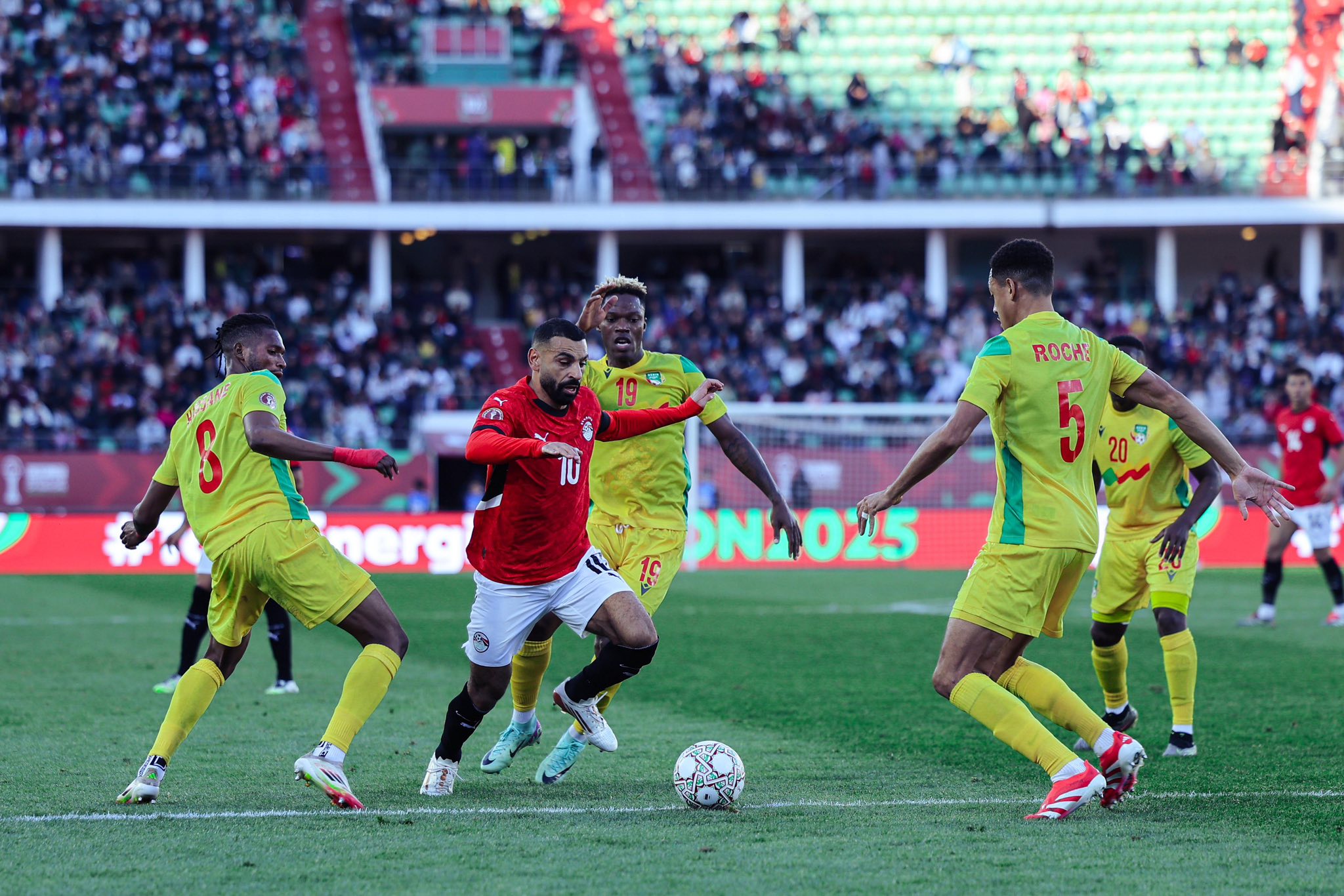
The Pharaohs gave their passionate supporters plenty of hope early during a successful group stage, where they won their group courtesy of a strong performance in a victory over South Africa. However, the warning signs were there in an unconvincing victory over Zimbabwe as well as an unexpected battle in the Round of 16 against Benin that required extra time.
Match-winners are his thing. Sadio Mané. 🇸🇳#TotalEnergiesAFCON2025 | #WePlayDifferent pic.twitter.com/szn6XWrPor
— TotalEnergies AFCON 2025 (@CAF_Online) January 14, 2026
In the end, Mohamed Salah failed to rise to the occasion at the most crucial moment and had little attacking support in a team that were overmatched and defeated by Senegal. What hurts the most for Egyptian supporters is the manner of their team’s elimination, which saw the record African champions bunkering down and hoping for a penalty kick shootout against a superior team.
Nigeria
There are many positives to take from this tournament for the Super Eagles, who once again woke up after a period of apparent decline that saw them miss out on qualification for the 2026 World Cup. Much credit must be given to coach Eric Chelle, who endured endless criticism it seemed but adjusted his tactics to get the best out of his squad ahead of an honorable exit against Morocco.
Symphonic. Replay-worthy from Nigeria. 🇳🇬#TotalEnergiesAFCON2025 | #WePlayDifferent pic.twitter.com/lXMYpe2zuK
— TotalEnergies AFCON 2025 (@CAF_Online) January 10, 2026
But a semifinal finish was probably the maximum this team could achieve. Attacking superstars Victor Osimhen and Ademola Lookman did not have enough left in the tank to produce magic against a well-organized Moroccan defense before Nigeria fell in a penalty shootout. This squad realistically had little to no depth, something that was tactically exploited by the hosts. Chelle is certainly a worthy coach for this side but the Nigerian talent pool must be explored because there were many inexperienced players in the team.
Quarterfinalists: Mali, Ivory Coast, Algeria and Cameroon
Mali
For the fourth consecutive AFCON, Les Aigles reached the knockout stage but failed to make the elusive deep run that supporters desire. This time around, it was mental weakness that cost them in the form of Yves Bissouma’s careless sending off before halftime against Senegal. The Eagles could have easily exited in the Round of 16 as well following another first half red card.
Based on the high amount of Malian talent that continues to move to European club football, the national team will continue to regularly reach the Round of 16 and quarterfinal stages. But until this group improves their match management and finds a coach who can build team chemistry to its highest level, Mali will continue to come up short against Africa’s top football powers.
Ivory Coast
It just never seemed like Ivory Coast provided the necessary intensity to defend their title. The Elephants were never challenged as they easily sleepwalked through qualification campaigns for this AFCON as well as the 2026 World Cup, but it appears that this stretch may have hurt their chances in Morocco.
Amad Diallo’s finishes are captivating. Just look. 🇨🇮#TotalEnergiesAFCON2025 | #WePlayDifferent pic.twitter.com/REbRjnny9O
— TotalEnergies AFCON 2025 (@CAF_Online) January 6, 2026
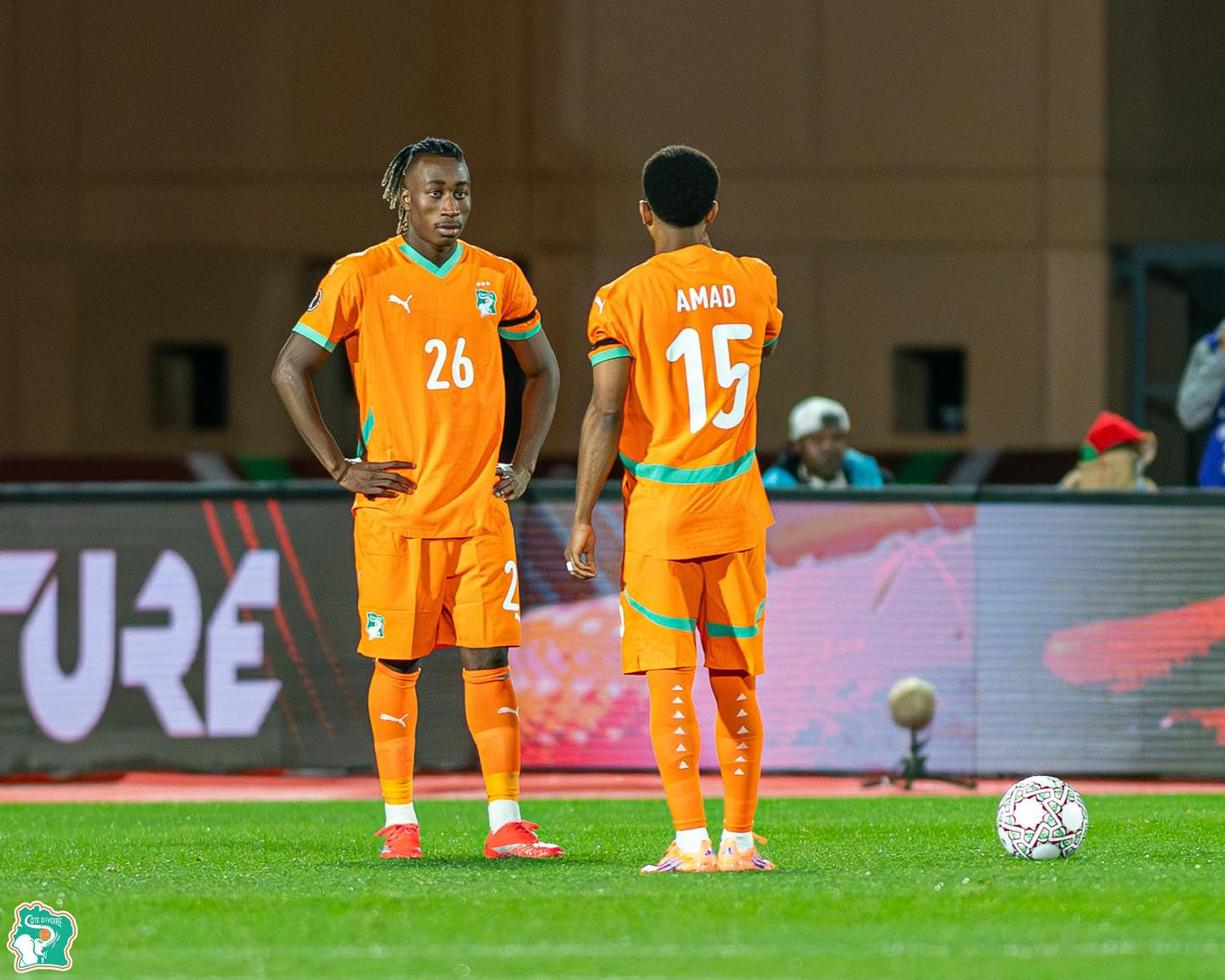
Coach Emerse Faé made an excellent decision to turn to younger players like Yan Diomandé, Amad Diallo and Christ Inao Oulai. While these squad decisions sparked the team in the group stage, a lack of focus led to a two-goal deficit in the first half against Egypt that the Ivorians could not quite recover from. This team had the talent to win the tournament but a poor start or loss of focus is enough to ruin it all in the knockout stages…
Algeria
It seemed like this Les Verts team was in strong shape but a weak group masked their weaknesses. After easily winning a group where Burkina Faso provided the only challenge, Algeria did enough to defeat a defensively strong DR Congo side but suffered a rude awakening against Nigeria.
Facing a team that was in top form offensively, the Algerian midfield was completely overwhelmed by the pace and efficiency of the Nigerian attack. They were overrun centrally and on the flanks while rising attackers like Mohamed Amoura, Anis Hadj Moussa and Ibrahim Maza learned the hard way that AFCON elimination games require more intensity and efficiency.
Cameroon
This tournament was a success for the Indomitable Lions, who regained some of the trust they have lost with their supporters over recent years. Younger talents like forwards Christian Kofane and Alfred Etta Eyong showed signs of their potential as well as midfielder Arthur Avom among others. However, it seems like the praise and proclamations of “Cameroon is back!” were a bit premature.
Flying high and scoring! Christian Kofané nets the @1xBet_Eng Goal of the Day. 🇨🇲#TotalEnergiesAFCON2025 pic.twitter.com/8DsqXfgxIG
— TotalEnergies AFCON 2025 (@CAF_Online) January 5, 2026
However, what Cameroonians wanted from this tournament was a reason to believe in their team again and the mission was accomplished. With Bryan Mbeumo and Carlos Baleba positioned to be the stars moving forward, now the new objective is the further development of the rising stars and a growth of consistency within the entire squad….easier said than done.
Round of 16: Tunisia, Sudan, Benin, Burkina Faso, DR Congo, Mozambique, South Africa and Tanzania
Tunisia
The alarm bells are ringing in Tunisian football as the Eagles of Carthage continue to stagnate and fail to inspire. A team that is known for its consistency but is rather unspectacular, supporters are beginning to wonder if their national team is more mediocre rather than consistent and solid.
Based on the performance of the attack, mediocre may be the best word to evaluate Tunisia when compared to their peers in African football. They are a reliable team against weaker sides but have shown absolutely no potential to overcome their main problem of challenging the powerhouses from North and West Africa.
Sudan
This tournament meekly concluded what may be the best stretch of football for Sudanese in nearly fifteen years. Ghanaian coach James Kwesi Appiah and his charges made a genuine challenge to qualify for the 2026 World Cup but this team fell into a rough patch of form at the worst time.
They achieved the bare minimum to avoid failure by edging Equatorial Guinea in the group stage to qualify for the knockout stages. But after falling to Senegal, this team is in need of fresh faces and it appears the decline may continue as star players like Mohamed Abdelrahman continue to move deeper into the twilight of their careers.
Benin
The Cheetahs and coach Gernot Rohr generated excitement in the nation by reaching the Round of 16, a strong accomplishment for the West Africans who have quietly improved their youth development in a crowded regional scene. Their victory against Botswana was a moment of inspiration while the Cheetahs put in respectable performances against the likes of Senegal, DR Congo and Egypt.
Several talented younger players impressed when called upon in the group stage, a positive reward for a country that previously rarely showed the potential to progress from the middle of the pack in African football. The reputation of Beninese football is only growing at this point and the team is producing its own talent rather than desperately searching for dual national players to boost their quality.
Burkina Faso
It is no longer an accomplishment for the Stallions to reach the knockout stages. Expectations are higher and coach Brama Traoré paid the price with his job after a weak 0-3 defeat to neighbors and rivals Ivory Coast. Like another neighbor, Mali, Burkina Faso’s youth development is generating positive results but it appears that time is needed for this group to reach their best level.
Le départ de Brama Traoré à la tête des Étalons du Burkina Faso 🇧🇫 n’apportera pas de solutions aux problèmes du football burkinabè.
Il est impératif de nettoyer le milieu jusqu’à la fédération, où la plupart des membres du bureau sont liés à un club de football ou représentent… pic.twitter.com/CKfFrYF8hp
— Ablam GNAMESSO (@AblamGnamesso) January 15, 2026
Burkina Faso have a history of exceeding expectations with several surprisingly deep runs at the AFCON. However, the question for the Stallions is now whether it is realistic to expect these deep runs or are they merely a team where a quarterfinal finish is the best they can aspire to?
DR Congo
Featuring one of the top defenses in African football, the Leopards continued to show their potential after winning the African regional playoff in 2026 World Cup qualifying. The finish in Morocco wasn’t ideal but the fact remains that this looks like a focused and strong group under head coach Sébastien Desabre.
Nation-shaking. As powerful as its meaning. Boulbina. 🇩🇿#TotalEnergiesAFCON2025 | #WePlayDifferent pic.twitter.com/tODrpws1tK
— TotalEnergies AFCON 2025 (@CAF_Online) January 6, 2026
However, a moment of individual brilliance from Algeria’s Adil Boulbina sent the DRC home and showed how relying on a defensive strategy can backfire in the knockout stages. This team has played a lot of competitive matches recently but their impressive group stage performance somewhat negates the disappointment of going out at the Round of 16. Onward to the final 2026 World Cup qualifying playoff next March for the Leopards.
Mozambique
The Mambas, similarly to Sudan, achieved the best possible finish supporters could realistically hope for. Known for their fighting spirit, they accomplished their first-ever AFCON victory in a very difficult group (Ivory Coast, Cameroon, Gabon). However, despite some talented players in the squad, they were humbled by a Nigeria team that was firing on all cylinders.
South Africa
Disappointing outing for Bafana Bafana, who did not show the signs of potential for another deep AFCON run. The tournament performance is a bit of a blow to coach Hugo Broos, whose previous results inspired a real boost to the confidence and ambitions of Bafana supporters as well as the team.
Heads high, Bafana Bafana. 🇿🇦💛#TotalEnergiesAFCON2025 pic.twitter.com/ykLJR0AgKa
— TotalEnergies AFCON 2025 (@CAF_Online) January 4, 2026
This tournament can be excused as a blip on the radar. However, there was a strong belief that this team could be outside contenders to make a run to the final. After being bounced in the Round of 16 by a Cameroon team that is good but not great, the reality is perhaps that South Africa are not quite ready to ascend to the top tier of African national teams yet. At the same time, their growing accomplishments at the youth national team level is a reassurance that they will only progress.
Tanzania
Having sixteen teams advance from the 24-team group stage results in a few unworthy sides in the Round of 16. While many were ready to put this label on the Taifa Stars, it must be said now that they are capable of challenging any team in Africa when their strong defense performs at its best.
But this team cannot score goals consistently and this fact means that it is impossible to aspire to anything greater than respectable showings at the AFCON. There is some potential among the younger players in the attacking ranks for Tanzania but the nation’s youth development system is not particularly strong and it will take time for the current crop of young attackers to find their stride.
Group Stage: Zambia, Comoros, Angola, Zimbabwe, Uganda, Botswana, Equatorial Guinea and Gabon
Gabon
Among this group, Gabon deserves the most attention after a complete meltdown that extended off the pitch. A difficult group and uninspired performances made the Panthers exit in shame, a disappointing and likely finish to the national team careers of players like Pierre-Emerick Aubameyang, Bruno Ecuele Manga and several other long-serving veteran players.
Zambia
Southern Africa’s COSAFA region contributes five teams to the list of group stage exits. The decision of Zambia coach Moses Sichone to hand the captain’s armband to Fashion Sakala was a costly error and despite the presence of some very talented young players, the Chipolopolo will never perform to their full potential as long as Sakala and another star forward, Patson Daka, are on the pitch at the same time. The two attackers are simply incompatible and this has been proven time and time again.
Botswana
The Zebras fell into a patch of poor form before the tournament and never recovered their confidence. A difficult group doomed them to failure and Botswana became a case study of how teams at the AFCON finals can look completely different from the team that qualified over a year prior.
Comoros
Les Coelacanthes have nothing to be ashamed of but simply could not score. A promising 0-0 draw with Mali to begin the tournament was followed by a drab draw against Zambia in the match they needed to win. This program continues to grow even if they are very dependent on dual national players. However, the Comorian federation continues to attract better and better talents from the nation’s diaspora and this is likely to continue.
Angola
Similarly to Botswana, this group suffered a downturn in form before the AFCON finals that likely had a negative impact. After failing to qualify for the 2026 World Cup along with the departure of previous coach Pedro Gonçalves, there was limited time for Patrice Beaumelle to make an imprint on this group.
Zimbabwe
Coach Mario Marinica had the luxury of little expectation. Known for taking on assignments with lesser-talented teams, the Romanian’s charges exited early but put in an inspired effort. Taking the lead against Egypt in their opener and providing a serious challenge to regional rivals South Africa, the Warriors are probably the only team in this group that can be proud of their performances.
Equatorial Guinea
Organizational chaos had a severe effect on this group, who reached the knockout stages at the previous two AFCON tournaments. There is some potential in the team but with reliable veteran stars getting older, merely appearing at the AFCON may be the best that Nzalang Nzalang supporters can hope for.
Uganda
The murmurs and discussion in Ugandan football indicated little optimism for the Cranes ahead of the tournament, and those fears came to fruition. Coach Paul Put got as much as he possibly could out of these players but there just isn’t enough talent to have ambitions at the AFCON. In addition, bringing in dual national players who provide little upgrade compared to locally developed talents is a pointless exercise.