
Adaramola Yemiblak
February 5, 2026Kun Khalifat withdraws from NPFL over “outrageous” sanctions
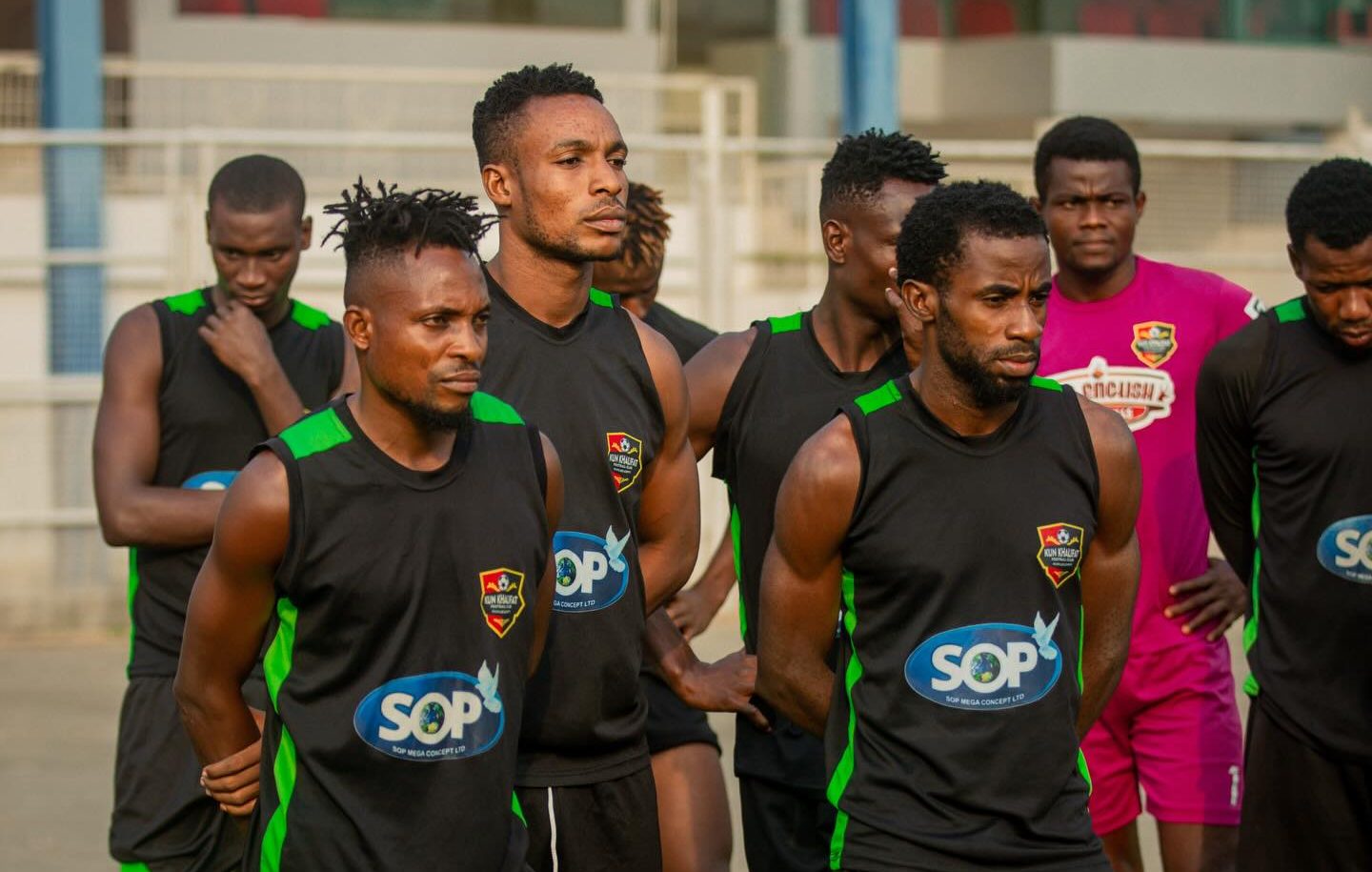
Photo Credit: Kun khalifat fc
Kun Khalifat withdraws from NPFL over “outrageous” sanctions
Nigeria Premier Football League (NPFL) club Kun Khalifat has announced its withdrawal from the league, citing “outrageous and disproportionate” sanctions.
The NPFL management handed the Owerri-based club a three-point and three-goal deduction for failing to honor their Matchday 24 fixture against El-Kanemi Warriors in Maiduguri on Monday.
Despite our first letter dated 28/1/2026 and the follow up letter on 31/1/2026 which was not replied, pic.twitter.com/jxpM7NkhdH
— Kun Khalifat Fc (@khalifatfc) February 4, 2026
According to the league body, Kun Khalifat’s decision breached the league’s framework and rules. The NPFL also imposed a ₦10 million fine, which remains suspended for the rest of the season provided no similar offenses occur.
Kun Khalifat gained promotion to NPFL last season
Reacting to the penalties, the club accused the NPFL of focusing solely on revenue and failing to prioritize player safety. Club officials insisted that valid reasons were provided for missing the match, but these were rejected by the league.
“The punishment handed down to us is not only unacceptable but a clear indication that the league’s management is more interested in penalising clubs than fostering growth and development.
We cannot continue to be part of a system that disregards the well-being of its member clubs and prioritises punishment over fairness and justice.”
Kun Khalifat gained promotion to the NPFL from the Nigeria National League, NNL, last season.
Kun Khalifat Withdraw From NPFL Over Sanctions Dispute
Kun Khalifat’s decision to withdraw from the Nigeria Premier Football League has sparked widespread debate across Nigerian football circles, with many stakeholders questioning the balance between league regulations and club welfare. The Owerri-based side believe the sanctions imposed on them were excessive and failed to consider the circumstances surrounding their inability to honor the fixture in Maiduguri.
According to the club, safety concerns were central to their decision not to travel for the Matchday 24 encounter against El-Kanemi Warriors. Officials insist that formal communication was sent to the NPFL ahead of the fixture, outlining their reservations and requesting guidance, but claim those letters went unanswered.
NPFL Defends Its Decision
From the league’s perspective, the sanctions were applied strictly in line with established rules. The NPFL maintains that failure to honor a scheduled fixture constitutes a breach of league regulations, regardless of the reasons provided, unless officially approved by the organizers.
By imposing a three-point and three-goal deduction, the league aimed to reinforce discipline and ensure uniform compliance among participating clubs. The ₦10 million fine, though suspended, further underlines the seriousness with which the NPFL views fixture obligations.
League sources argue that allowing clubs to skip matches without consequence could set a dangerous precedent and undermine the integrity of the competition.
Club Raises Player Safety Concerns
Kun Khalifat, however, have strongly pushed back against that stance. In their official statement, the club accused the league of prioritising revenue generation over player safety and welfare. They argue that the sanctions send the wrong message, particularly in a league where travel logistics and security challenges remain ongoing concerns.
“The punishment handed down to us is not only unacceptable but a clear indication that the league’s management is more interested in penalising clubs than fostering growth and development,” the statement read.
The club further stressed that they could not continue participating in a system they believe places punishment above fairness, dialogue, and player protection.
Impact on the NPFL Season
Kun Khalifat’s withdrawal presents a significant challenge for the NPFL, both competitively and administratively. Their exit could affect league scheduling, standings, and matchday planning, particularly if fixtures involving the club are annulled or restructured.
It also raises broader questions about governance, communication, and crisis management within the league. Observers note that similar disputes in the past have often escalated due to a lack of transparent engagement between clubs and league authorities.
A Tough Road for Newly Promoted Clubs
Having gained promotion from the Nigeria National League last season, Kun Khalifat were still adjusting to the demands of top-flight football. Newly promoted clubs often face financial strain, logistical hurdles, and increased operational costs, making disputes of this nature even more destabilising.
Their situation highlights the need for additional support structures for clubs transitioning into the NPFL, especially in areas such as travel planning, security coordination, and conflict resolution.
What Happens Next?
As things stand, it remains unclear whether Kun Khalifat’s withdrawal is final or if further discussions could lead to a resolution. Stakeholders across Nigerian football are urging both parties to seek dialogue, warning that prolonged disputes could damage the league’s credibility and discourage investment.
For now, Kun Khalifat’s exit stands as one of the most dramatic developments of the NPFL season—one that underscores the ongoing tension between regulation enforcement and club welfare in Nigerian football.