
Omna Taddele
February 21, 2026Ethiopian Premier League Committee admits refereeing errors affected 2025/26 season
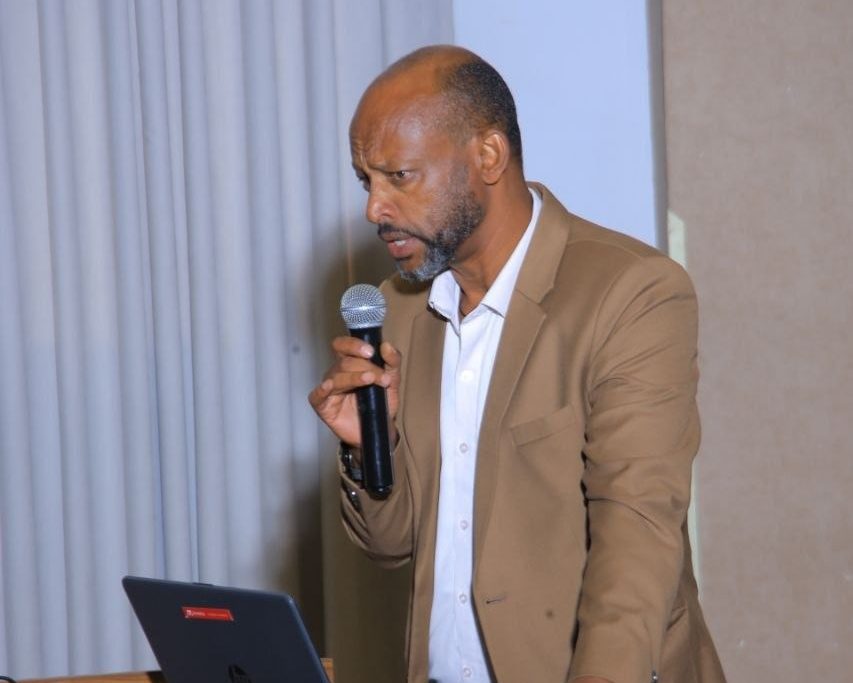
Photo: Ethiopian Premier League
Ethiopian Premier League Committee admits refereeing errors affected 2025/26 season
Ethiopian Premier League Competition and Discipline Committee head Wegene Walteniguse has admitted that the 2025/26 top-flight season has seen refereeing mistakes that unfairly gifted some clubs points. The committee head stressed that refereeing errors impacted the league during the first half of the season.
Walteniguse told state-owned broadcaster Ethiopian Broadcasting Corporation (EBC) that the mistakes are significant and evident. “Fans are right that mistakes have happened. The National Referee Committee has also acknowledged that errors have occurred. They stated that some clubs gained three points unfairly, while others lost three points due to these mistakes.”
Walteniguse emphasized that the mistakes have affected the league, with some even influencing the standings. “Some of the mistakes would have made a difference in the current league table. The National Referee Committee shares the same sentiment as we do. We also find that the mistakes have been costly.”
The committee head further added that out of the seven technical complaints presented to the league, only three were found to be valid. Walteniguse said the lack of regulations on how to handle such errors has prevented the committee from fully addressing the problem. He confirmed that, for now, taking administrative action and penalizing match officials has been the best possible solution.
After repeated refereeing mistakes in the top flight, the Ethiopian Football Federation (EFF) called an emergency meeting with match officials last month. The EFF warned referees that it is prepared to take harsh measures. In the meantime, the federation has pledged to provide communication equipment to assist referees.
Ethiopian Premier League 2026: Refereeing Mistakes Cost Clubs Crucial Points, Admits Committee Head
The head of the Ethiopian Premier League Competition and Discipline Committee, Wegene Walteniguse, has openly admitted that refereeing errors during the 2025/26 season have significantly impacted results, with some clubs unfairly gaining or losing valuable points.
Speaking to state-owned broadcaster Ethiopian Broadcasting Corporation (EBC), Walteniguse acknowledged widespread concerns among fans and stakeholders regarding officiating standards in the Ethiopian Premier League.
Refereeing Errors Influenced League Results
According to Walteniguse, mistakes made by match officials during the first half of the season were not isolated incidents but had a measurable impact on outcomes.
“Fans are right that mistakes have happened,” he said. “The National Referee Committee has also acknowledged that errors have occurred. They stated that some clubs gained three points unfairly, while others lost three points due to these mistakes.”
His remarks confirm what many supporters had suspected — that officiating decisions have directly altered match results and, in some cases, the overall league standings.
In a tightly contested title race and relegation battle, a single three-point swing can dramatically change a club’s trajectory.
League Standings Potentially Affected
Walteniguse further stressed that the impact of these errors goes beyond individual matches.
“Some of the mistakes would have made a difference in the current league table,” he explained. “The National Referee Committee shares the same sentiment as we do. We also find that the mistakes have been costly.”
This admission raises broader concerns about competitive integrity. With several teams separated by only a few points in both the title race and the relegation zone, controversial decisions could ultimately determine promotion, continental qualification, or demotion.
The controversy has intensified debate around accountability and structural reform within Ethiopian football officiating systems.
Limited Technical Complaints Upheld
Despite the concerns, only a fraction of formal protests have been validated.
Out of seven technical complaints submitted to the league authorities, just three were deemed legitimate upon review.
This suggests that while some grievances were justified, others may have stemmed from emotional reactions following contentious matches.
However, Walteniguse pointed out a significant obstacle: the absence of clear regulatory mechanisms to reverse or adjust results when officiating errors occur.
“There are limitations in our regulations regarding how to address such mistakes,” he stated.
Currently, the primary corrective measure available has been administrative action against referees rather than altering match outcomes.
Ethiopian Football Federation Responds
Following repeated incidents, the Ethiopian Football Federation (EFF) convened an emergency meeting with referees last month.
During the meeting, the federation issued a strong warning, indicating that stricter disciplinary measures could follow if officiating standards do not improve.
In addition to warnings, the EFF pledged to enhance refereeing support systems. One immediate step includes providing improved communication equipment to match officials to reduce coordination errors during games.
The move signals a recognition that systemic improvements, not just disciplinary sanctions, are required.
Structural Challenges Facing Ethiopian Officiating
The issue of refereeing standards is not unique to Ethiopia, but the absence of advanced technological tools such as VAR (Video Assistant Referee) in the domestic league compounds the problem.
Without video review systems, match officials rely solely on real-time judgment, increasing the likelihood of human error — especially in high-pressure situations.
Furthermore, limited training resources, fitness programs, and professional development opportunities for referees may contribute to inconsistencies.
Experts argue that long-term solutions must include:
-
Enhanced referee training programs
-
Clearer disciplinary frameworks
-
Transparent review procedures
-
Potential technological integration
Impact on Clubs and Fan Confidence
Beyond points and standings, repeated officiating errors risk eroding fan trust in the competition.
Supporters invest emotionally and financially in their clubs. When mistakes appear to influence results, confidence in fairness can decline.
For clubs competing for continental qualification spots or battling relegation, perceived injustice can also create tension between management and league authorities.
Restoring credibility will require consistent improvement and transparent communication.
What Happens Next?
The second half of the Ethiopian Premier League season will now be closely monitored.
With heightened scrutiny from fans, clubs, and administrators, referees are under increased pressure to deliver accurate and consistent performances.
The EFF’s commitment to reform suggests that change is underway, but its effectiveness will be measured by improved officiating in upcoming fixtures.
For now, Walteniguse’s candid admission marks an important step toward accountability — acknowledging the problem publicly rather than dismissing concerns.
Final Outlook
The 2025/26 Ethiopian Premier League season has been competitive and dramatic, but refereeing controversies have cast a shadow over the campaign.
While administrative penalties have been imposed and reforms promised, the real test lies ahead.
If officiating standards improve in the second half of the season, the league may regain stability and credibility. If not, calls for deeper structural reform could intensify.
One thing is clear: in a league where margins are slim, every decision matters.