
Omna Taddele
February 11, 2026AFCON 2027: Doubts grow over East Africa’s hosting capabilities
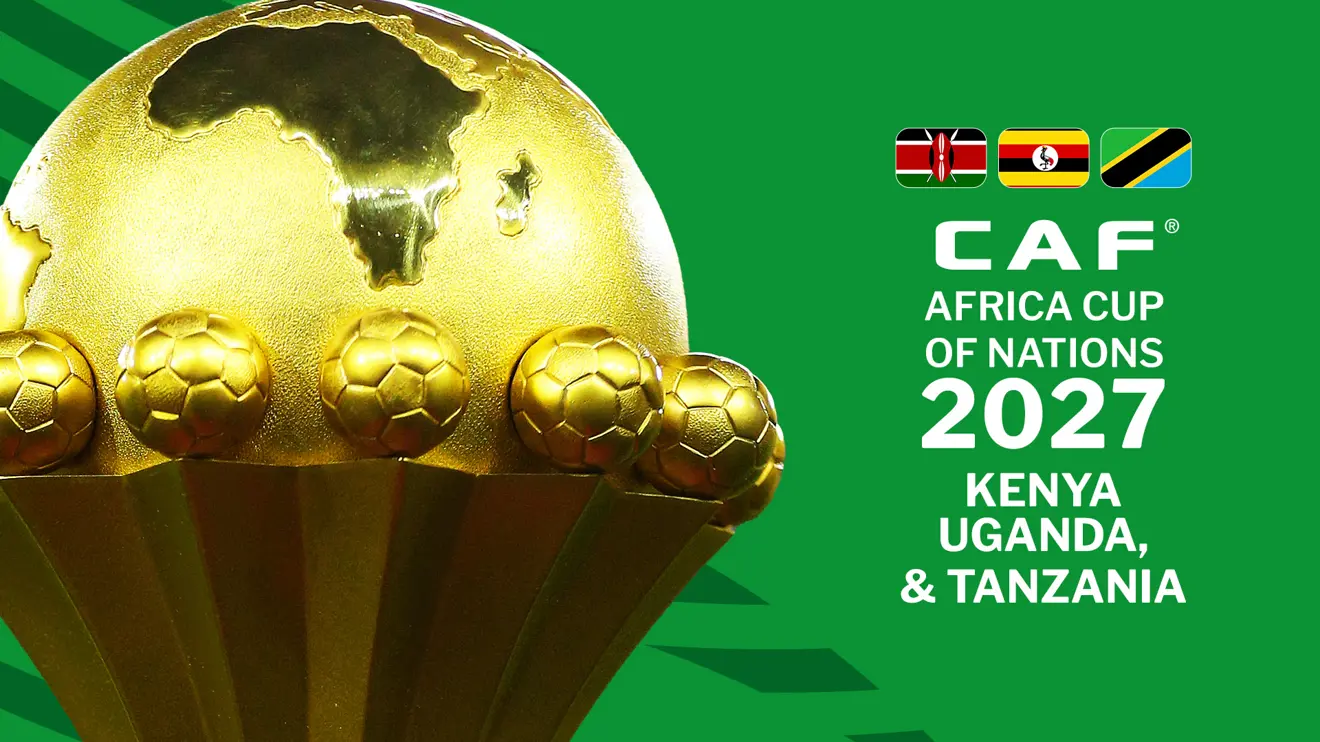
AFCON 2027: Doubts grow over East Africa’s hosting capabilities
The 2027 Africa Cup of Nations (AFCON), which is due to be held in Kenya, Tanzania, and Uganda, might be pushed to 2028. According to The Guardian, the Confederation of African Football (CAF) is contemplating postponing the 2027 AFCON due to several factors.
Next year’s Africa Cup of Nations could be postponed until 2028 due to doubts over the readiness of Kenya, Tanzania and Uganda to host tournament in move that would see CAF scrap one edition of its showpiece competition. Story with @Romain_Molina https://t.co/yWYZXKEvW6
— Ed Aarons (@ed_aarons) February 11, 2026
The Guardian cited unnamed CAF Executive Committee members who raised major concerns over the ability of the host nations to stage a 24-team tournament across 10 cities in 2027. Ticketing and security problems during the 2024 African Nations Championship (CHAN) in August 2025 have also cast doubt over AFCON taking place in 2027.
The three host nations are still undergoing major stadium construction projects to stage the tournament. The qualification schedule has also raised concerns, with up to ten African teams participating in the 2026 FIFA World Cup in the summer.
The CAF Executive Committee will meet this Friday in the Tanzanian capital, Dar es Salaam, and the 2027 AFCON will be one of the pertinent issues to be discussed. Postponing the tournament by a year might be considered at the ExCo level.
If the tournament is pushed back by 12 months, the 2028 AFCON hosting rights would be off the table for countries like South Africa, Botswana, and Ethiopia. CAF has adopted a new schedule for AFCON, under which it will be staged every four years instead of every two years. CAF earlier today officially stated that it has sent a technical expert group to the three host nations ahead of the ExCo meeting on Friday.
The Guardian also reported that the 2026 Women’s Africa Cup of Nations host could change, with only a month left before kickoff. Morocco has indicated it will no longer stage the tournament, and South Africa is tipped to replace the North African nation. The Guardian added that CAF and the Royal Moroccan Football Federation have not commented on this development thus far.
AFCON 2027 Under Scrutiny: Could East Africa’s “Pamoja” Dream Be Delayed?
The 2027 Africa Cup of Nations (AFCON), a historic joint venture set to be hosted by Kenya, Tanzania, and Uganda, is currently facing a critical litmus test. According to reports from The Guardian and regional insiders, the Confederation of African Football (CAF) is seriously contemplating a 12-month postponement that would push the tournament to 2028.
This potential shift is not merely a scheduling tweak; it represents a major tactical decision that could redefine CAF’s roadmap for the next decade.
Infrastructure Delays and “Pamoja” Readiness
The primary driver behind the postponement talks is the uneven progress of infrastructure across the three host nations. While Tanzania has made significant strides with the Samia Suluhu Stadium in Arusha and renovations to the Benjamin Mkapa Stadium, Kenya and Uganda are still navigating complex construction timelines.
In Kenya, flagship projects like the Talanta Sports City and the overhaul of the Moi International Sports Centre, Kasarani, are massive undertakings that require precision to meet CAF’s “Category 4” stadium requirements. Similarly, Uganda is racing to finalize the Hoima City Stadium and renovations at the Mandela National Stadium (Namboole).
Unnamed CAF Executive Committee members have expressed concerns that a 24-team tournament, spread across 10 different cities, requires a level of logistical and stadium readiness that may not be fully realized by mid-2027.
The “August 2027” Political Hurdle
A new and significant factor has emerged from within the Kenyan Local Organizing Committee. Nicholas Musonye, the LOC Chairperson, recently told AFP that a delay to 2028 might actually be a strategic blessing for Kenya.
“Postponing the tournament to 2028 would be good for Kenya considering the country would be gearing up for national general elections in August 2027,” Musonye noted.
Historically, general elections in the region have been periods of heightened tension. Staging the continent’s biggest sporting event simultaneously with a national election raises immense security and fan-safety concerns that CAF is eager to avoid following the chaotic scenes at the AFCON 2025 final in Morocco.
The Transition to a Four-Year Cycle
The postponement aligns with a broader structural reform announced by CAF President Patrice Motsepe in late 2025. CAF has officially confirmed a move from a biennial (every two years) format to a quadrennial (every four years) cycle starting in 2028.
Under this plan:
-
2027 AFCON was intended to be the final “interim” tournament.
-
2028 AFCON would mark the official start of the four-year cycle.
-
African Nations League (ANL): To fill the gap and maintain revenue, CAF plans to launch an annual Nations League in 2029.
If the “Pamoja” bid is pushed to 2028, it would effectively become the launchpad for this new era, potentially leading CAF to scrap the original 2028 bidding process entirely.
Crisis in Women’s Football: The WAFCON 2026 Hosting Chaos
The CAF ExCo meeting in Dar es Salaam is also grappling with an immediate crisis: the 2026 Women’s Africa Cup of Nations (WAFCON). With the tournament scheduled to kick off on March 17, rumors have intensified that Morocco is withdrawing as host.
While South Africa’s Minister of Sport, Gayton McKenzie, has clarified that no formal decision has been made, he confirmed that South Africa is “ready to step in” as part of CAF’s routine contingency planning. The sudden uncertainty surrounding a tournament just weeks away has added to the pressure on Motsepe to demonstrate firm leadership during Friday’s deliberations.
What Happens Next?
A technical expert group from CAF is currently conducting a “deep dive” inspection across Nairobi, Kampala, and Dar es Salaam, with their final report expected by February 17.
The resolutions from today’s meeting in Tanzania will be definitive. Whether CAF chooses to “stay the course” for 2027 or pivot to a 2028 “super-tournament,” the decision will have a lasting impact on the development of football infrastructure in East Africa.