
Martin T
January 24, 2026CAFCL: Sundowns sloppy starters: Cardoso blasts ‘naive’ defence
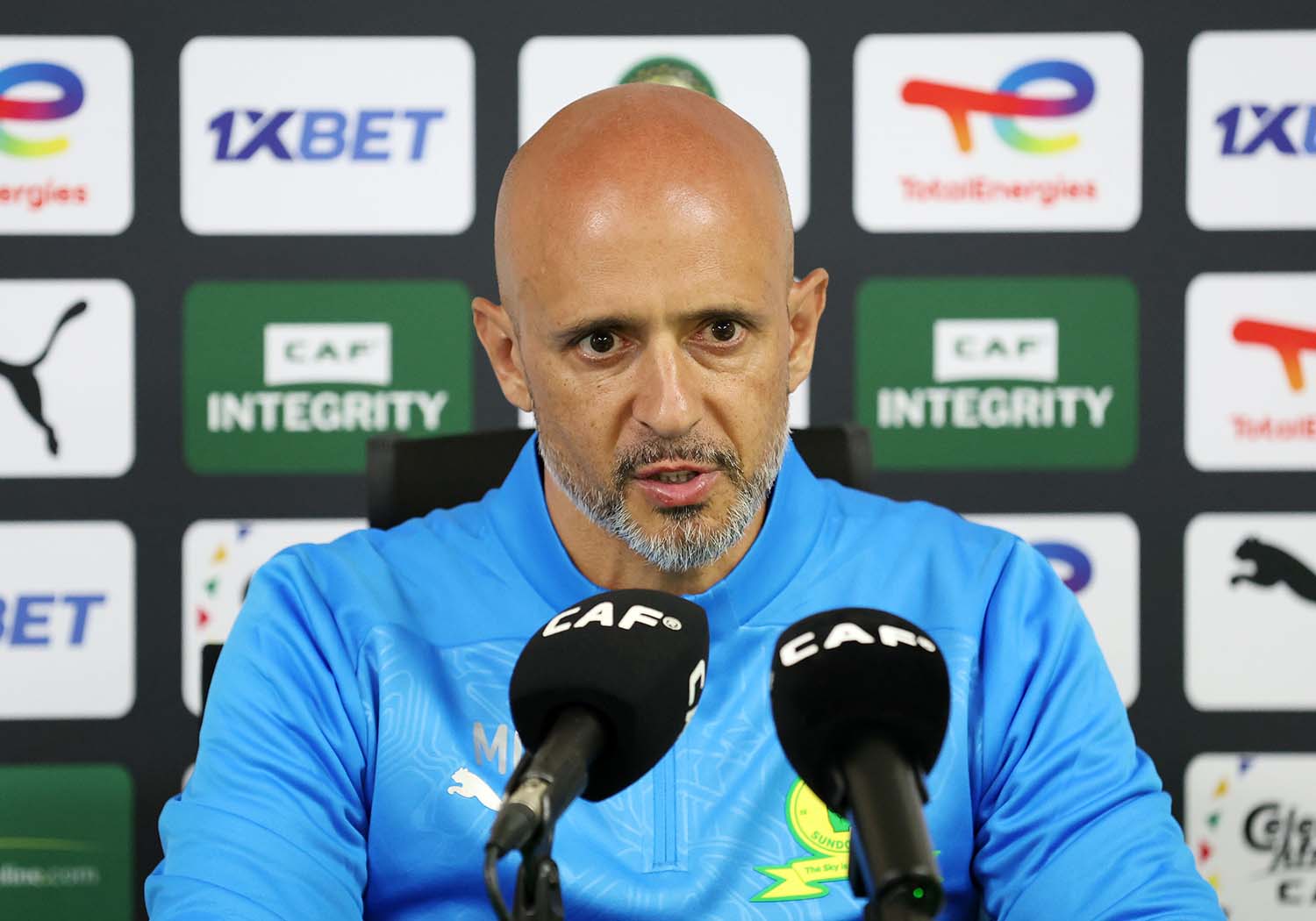
Miguel Cardoso. Photo credit: Mamelodi Sundowns
CAFCL: Sundowns sloppy starters: Cardoso blasts ‘naive’ defence
Mamelodi Sundowns head coach Miguel Cardoso didn’t mince words on Friday night, pointing the finger squarely at his own side after a frustrating 2-2 draw against Al Hilal.
Despite a dominant performance at Loftus Versfeld, the Brazilian giants were forced to share the spoils in a CAF Champions League Group C encounter that felt more like two points lost than one point gained.
While the Sundowns faithful were treated to goals from Arthur Sales and Teboho Mokoena, they were cancelled out by a clinical brace from Al Hilal’s Omer Taha. For Cardoso, the math simply didn’t add up.
Missed Opportunities and Defensive Lapses By Sundowns
“Unfortunately, we can only complain about ourselves,” a candid Cardoso told SABC Sport post-match. “We outplayed them, had control, and created more than enough to get a victory.”
The coach’s primary frustration stemmed from the contrast between Sundowns’ wasteful finishing and Al Hilal’s efficiency. Cardoso labelled his defence “naive,” noting that the Sudanese visitors managed to find the back of the net on nearly every meaningful foray into the box.
“I think they entered our box two times and scored… this is the level of football where you can’t make these mistakes.”
Despite the stutter, Sundowns remain at the summit of Group C, tied at five points with Al Hilal. With FC St Eloi Lupopo and MC Alger currently trailing with a point apiece (and a game in hand), the qualification race remains firmly in the Brazilians’ hands.
Pressure Mounting on Cardoso?
The result comes at a sensitive time for Cardoso, whose tactical approach has faced increasing scrutiny in recent weeks. However, the coach remains defiant regarding the club’s trajectory, drawing parallels to previous campaigns.
“Last season the situation was more critical,” Cardoso remarked, dismissing panic. “Nobody can go in front of us [right now]. It’s a tough group, but it would have been important to convert those chances today.”
Sundowns will now need to sharpen their clinical edge as they head into the final three fixtures of the group stage, where “naive” mistakes could prove the difference between a deep run and an early exit.