
Adamu Muftawu
February 13, 2026Herve Renard opens up on why he failed to coach Senegal
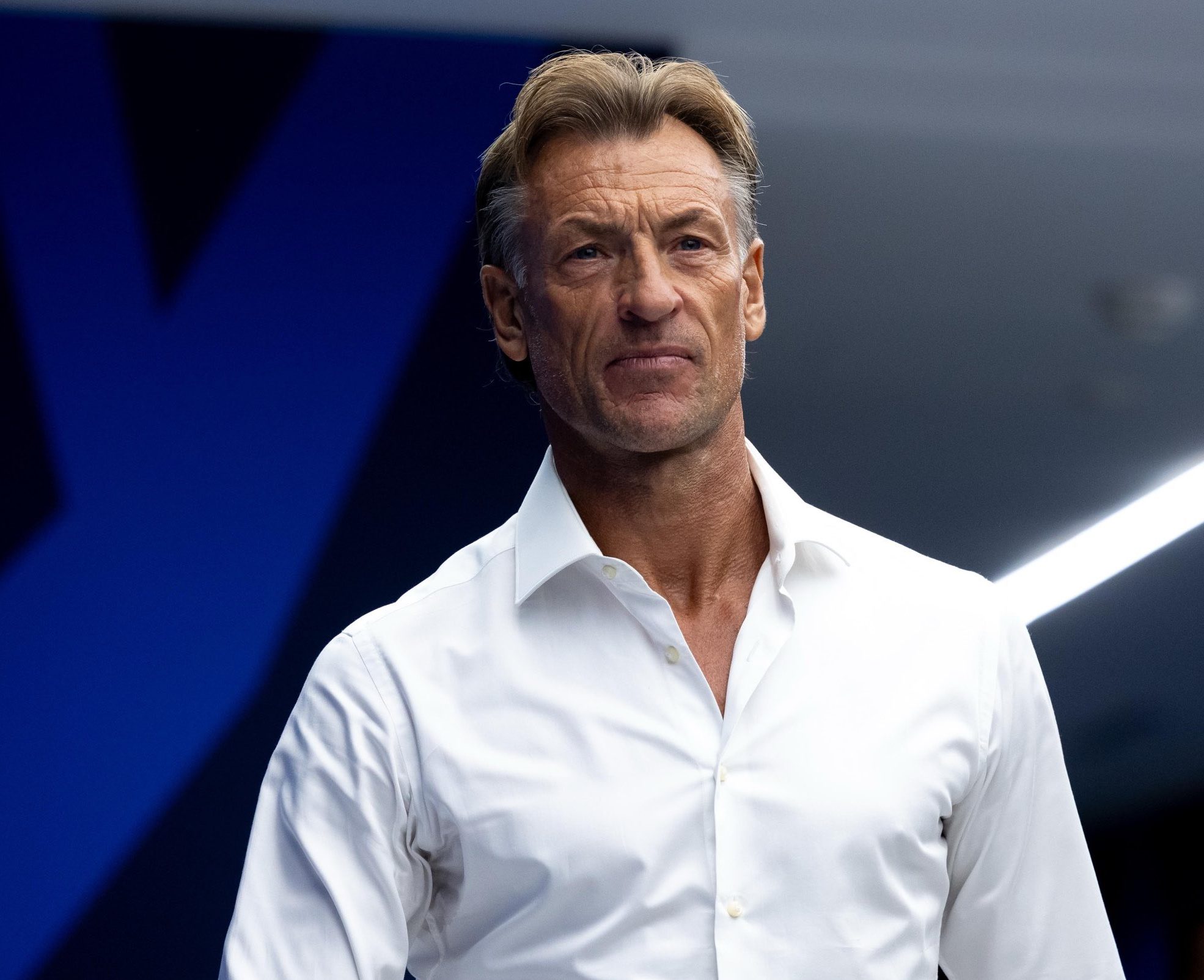
Photo Credit: Saudi Arabia FA
Herve Renard opens up on why he failed to coach Senegal
French coach Herve Renard has opened up on why his proposed move to handle the Senegal national team failed to materialize.
Following the Teranga Lions’s elimination in the round of 16 of the 2023 Africa Cup of Nations and the departure of Aliou Cissé, the Senegalese Football Federation (FSF) began its search for a new national team coach.
Among the candidates considered was Hervé Renard, who was then available after his stint as head coach of the French women’s national team.
The French coach ultimately did not join the Senegalese national team after several talks with the FSF opting instead for home grown Pape Thiaw.
This decision proved fruitful, as Thiaw led Senegal to its second continental title, secured on January 18th in Rabat.
Renard led Zambia and Ivory Coast to AFCON title
In an interview with Jeune Afrique, coinciding with the release of his book, *Me, Football, Africa*, Hervé Renard discussed the discussions with the FSF and the reasons for his decision not to join the team.
“In Senegal, all the conditions weren’t right, but I wanted to take on this challenge,” he said.
Currently the coach of Saudi Arabia, Renard nevertheless affirms his attachment to the African continent and doesn’t rule out a return.
“If a well-organized federation offers me a good sporting project, I could be interested. The financial aspect isn’t the primary criterion; it never has been for me. I feel good in Africa, and I’ll come back one day,” he asserted.
Herve Renard, 57, led two countries to the Africa Cup of Nations first with the Chipopolo of Zambia in 2012 and the Elephants of Ivory Coast two years later.
The Untold Story: Why Herve Renard Rejected the Senegal Job Before Their AFCON Triumph
French tactician Herve Renard has finally broken his silence regarding the highly publicized but ultimately failed negotiations to take over the Senegal national team. In a revelation that adds a fascinating layer to recent African football history, the “White Wizard” admitted that while the desire was there, the environment was not.
Following the Teranga Lions’ heartbreaking elimination in the round of 16 of the 2023 Africa Cup of Nations and the subsequent departure of long-serving manager Aliou Cissé, the Senegalese Football Federation (FSF) found itself at a crossroads. The Federation launched a high-profile search for a successor capable of restoring the nation’s dominance.
Top of that list was Hervé Renard. Fresh from his stint as head coach of the France women’s national team and famous for his continental successes, he seemed the perfect fit. However, history took a different turn, leading to the appointment of home-grown tactician Pape Thiaw, a decision that culminated in glory on January 18th in Rabat.
For a deeper dive into the tournament that just concluded, check our AFCON 2025 Final Match Report.
“The Conditions Weren’t Right”
In a candid interview with Jeune Afrique, timed to coincide with the release of his new autobiography, Me, Football, Africa, Renard pulled back the curtain on the talks with the FSF.
“In Senegal, all the conditions weren’t right, but I wanted to take on this challenge,” Renard confessed.
While he did not specify the exact contractual or logistical hurdles, insiders suggest that timing and control over the technical staff may have been sticking points. Renard is known for demanding absolute control over his squad’s environment—a formula that has delivered silverware in the past.
Despite the failed move, Renard holds no bitterness. His statement confirms that the interest was mutual and genuine. The prospect of Renard, a two-time AFCON winner, managing a squad boasting talents like Sadio Mané and Nicolas Jackson, was a “dream scenario” for many pundits. Yet, football is often about timing, and the stars did not align for this potential super-team.
The FSF’s Masterstroke: Betting on Pape Thiaw
Renard’s rejection forced the FSF to look inward, leading to the permanent appointment of Pape Thiaw. At the time, the decision was met with skepticism by fans hoping for a “big name” foreign coach.
However, the decision proved to be a masterstroke. Thiaw, understanding the local culture and the tactical nuances of the squad, led Senegal to their second continental title just weeks ago in Morocco. By opting for a local coach over the expensive foreign import, Senegal replicated the success of the 2021 campaign, proving that indigenous coaches are the future of African football.
You can read more about this trend in our analysis: The Rise of Local Coaches in African Football.
Renard’s Unbreakable Bond with Africa
Currently serving his second stint as the head coach of Saudi Arabia, the 57-year-old Renard remains deeply connected to the African continent. His book, Me, Football, Africa, serves as a love letter to the region that defined his career.
“If a well-organized federation offers me a good sporting project, I could be interested. The financial aspect isn’t the primary criterion; it never has been for me. I feel good in Africa, and I’ll come back one day,” he asserted.
This quote serves as a “come and get me” plea to future suitors. Renard emphasizes that his motivation is the “sporting project”—the potential to build, compete, and win—rather than the paycheck.
A Legacy of Continental Dominance
Why does Herve Renard remain the most coveted coach in Africa? His resume speaks for itself. He stands alone in history as the only coach to win the Africa Cup of Nations with two different countries:
-
Zambia (2012): He orchestrated one of the greatest underdog stories in football history, leading the Chipolopolo to victory against a star-studded Ivory Coast side in Libreville.
-
Ivory Coast (2015): Two years later, he returned to manage the Elephants, finally delivering the golden generation’s long-awaited trophy.
He also guided Morocco to the 2018 FIFA World Cup, their first appearance in 20 years, cementing his status as a miracle worker.
What Next for the White Wizard?
While he is currently focused on the Saudi project, Renard’s comments make it clear that his story in Africa is not finished. With the 2027 and 2029 AFCON tournaments on the horizon, it is almost certain that Renard’s name will surface again whenever a top African job becomes available.
For now, Senegal celebrates their title under Pape Thiaw, while Renard watches from the Gulf, waiting for the next “well-organized federation” to call.
The Untold Story: Why Herve Renard Rejected the Senegal Job Before Their AFCON Triumph
French tactician Herve Renard has finally broken his silence regarding the highly publicized but ultimately failed negotiations to take over the Senegal national team. In a revelation that adds a fascinating layer to recent African football history, the “White Wizard” admitted that while the desire was there, the environment was not.
Following the Teranga Lions’ heartbreaking elimination in the round of 16 of the 2023 Africa Cup of Nations and the subsequent departure of long-serving manager Aliou Cissé, the Senegalese Football Federation (FSF) found itself at a crossroads. The Federation launched a high-profile search for a successor capable of restoring the nation’s dominance.
Top of that list was Hervé Renard. Fresh from his stint as head coach of the France women’s national team and famous for his continental successes, he seemed the perfect fit. However, history took a different turn, leading to the appointment of home-grown tactician Pape Thiaw, a decision that culminated in glory on January 18th in Rabat.
For a deeper dive into the tournament that just concluded, check our AFCON 2025 Final Match Report.
“The Conditions Weren’t Right”
In a candid interview with Jeune Afrique, timed to coincide with the release of his new autobiography, Me, Football, Africa, Renard pulled back the curtain on the talks with the FSF.
“In Senegal, all the conditions weren’t right, but I wanted to take on this challenge,” Renard confessed.
While he did not specify the exact contractual or logistical hurdles, insiders suggest that timing and control over the technical staff may have been sticking points. Renard is known for demanding absolute control over his squad’s environment—a formula that has delivered silverware in the past.
Despite the failed move, Renard holds no bitterness. His statement confirms that the interest was mutual and genuine. The prospect of Renard, a two-time AFCON winner, managing a squad boasting talents like Sadio Mané and Nicolas Jackson, was a “dream scenario” for many pundits. Yet, football is often about timing, and the stars did not align for this potential super-team.
The FSF’s Masterstroke: Betting on Pape Thiaw
Renard’s rejection forced the FSF to look inward, leading to the permanent appointment of Pape Thiaw. At the time, the decision was met with skepticism by fans hoping for a “big name” foreign coach.
However, the decision proved to be a masterstroke. Thiaw, understanding the local culture and the tactical nuances of the squad, led Senegal to their second continental title just weeks ago in Morocco. By opting for a local coach over the expensive foreign import, Senegal replicated the success of the 2021 campaign, proving that indigenous coaches are the future of African football.
You can read more about this trend in our analysis: The Rise of Local Coaches in African Football.
Renard’s Unbreakable Bond with Africa
Currently serving his second stint as the head coach of Saudi Arabia, the 57-year-old Renard remains deeply connected to the African continent. His book, Me, Football, Africa, serves as a love letter to the region that defined his career.
“If a well-organized federation offers me a good sporting project, I could be interested. The financial aspect isn’t the primary criterion; it never has been for me. I feel good in Africa, and I’ll come back one day,” he asserted.
This quote serves as a “come and get me” plea to future suitors. Renard emphasizes that his motivation is the “sporting project”—the potential to build, compete, and win—rather than the paycheck.
A Legacy of Continental Dominance
Why does Herve Renard remain the most coveted coach in Africa? His resume speaks for itself. He stands alone in history as the only coach to win the Africa Cup of Nations with two different countries:
-
Zambia (2012): He orchestrated one of the greatest underdog stories in football history, leading the Chipolopolo to victory against a star-studded Ivory Coast side in Libreville.
-
Ivory Coast (2015): Two years later, he returned to manage the Elephants, finally delivering the golden generation’s long-awaited trophy.
He also guided Morocco to the 2018 FIFA World Cup, their first appearance in 20 years, cementing his status as a miracle worker.
What Next for the White Wizard?
While he is currently focused on the Saudi project, Renard’s comments make it clear that his story in Africa is not finished. With the 2027 and 2029 AFCON tournaments on the horizon, it is almost certain that Renard’s name will surface again whenever a top African job becomes available.
For now, Senegal celebrates their title under Pape Thiaw, while Renard watches from the Gulf, waiting for the next “well-organized federation” to call.
French coach Herve Renard has opened up on why his proposed move to handle the Senegal national team failed to materialize.
Following the Teranga Lions’s elimination in the round of 16 of the 2023 Africa Cup of Nations and the departure of Aliou Cissé, the Senegalese Football Federation (FSF) began its search for a new national team coach.
Among the candidates considered was Hervé Renard, who was then available after his stint as head coach of the French women’s national team.
The French coach ultimately did not join the Senegalese national team after several talks with the FSF opting instead for home grown Pape Thiaw.
This decision proved fruitful, as Thiaw led Senegal to its second continental title, secured on January 18th in Rabat.
Renard led Zambia and Ivory Coast to AFCON title
In an interview with Jeune Afrique, coinciding with the release of his book, *Me, Football, Africa*, Hervé Renard discussed the discussions with the FSF and the reasons for his decision not to join the team.
“In Senegal, all the conditions weren’t right, but I wanted to take on this challenge,” he said.
Currently the coach of Saudi Arabia, Renard nevertheless affirms his attachment to the African continent and doesn’t rule out a return.
“If a well-organized federation offers me a good sporting project, I could be interested. The financial aspect isn’t the primary criterion; it never has been for me. I feel good in Africa, and I’ll come back one day,” he asserted.
Herve Renard, 57, led two countries to the Africa Cup of Nations first with the Chipopolo of Zambia in 2012 and the Elephants of Ivory Coast two years later.
The Untold Story: Why Herve Renard Rejected the Senegal Job Before Their AFCON Triumph
French tactician Herve Renard has finally broken his silence regarding the highly publicized but ultimately failed negotiations to take over the Senegal national team. In a revelation that adds a fascinating layer to recent African football history, the “White Wizard” admitted that while the desire was there, the environment was not.
Following the Teranga Lions’ heartbreaking elimination in the round of 16 of the 2023 Africa Cup of Nations and the subsequent departure of long-serving manager Aliou Cissé, the Senegalese Football Federation (FSF) found itself at a crossroads. The Federation launched a high-profile search for a successor capable of restoring the nation’s dominance.
Top of that list was Hervé Renard. Fresh from his stint as head coach of the France women’s national team and famous for his continental successes, he seemed the perfect fit. However, history took a different turn, leading to the appointment of home-grown tactician Pape Thiaw, a decision that culminated in glory on January 18th in Rabat.
For a deeper dive into the tournament that just concluded, check our AFCON 2025 Final Match Report.
“The Conditions Weren’t Right”
In a candid interview with Jeune Afrique, timed to coincide with the release of his new autobiography, Me, Football, Africa, Renard pulled back the curtain on the talks with the FSF.
“In Senegal, all the conditions weren’t right, but I wanted to take on this challenge,” Renard confessed.
While he did not specify the exact contractual or logistical hurdles, insiders suggest that timing and control over the technical staff may have been sticking points. Renard is known for demanding absolute control over his squad’s environment—a formula that has delivered silverware in the past.
Despite the failed move, Renard holds no bitterness. His statement confirms that the interest was mutual and genuine. The prospect of Renard, a two-time AFCON winner, managing a squad boasting talents like Sadio Mané and Nicolas Jackson, was a “dream scenario” for many pundits. Yet, football is often about timing, and the stars did not align for this potential super-team.
The FSF’s Masterstroke: Betting on Pape Thiaw
Renard’s rejection forced the FSF to look inward, leading to the permanent appointment of Pape Thiaw. At the time, the decision was met with skepticism by fans hoping for a “big name” foreign coach.
However, the decision proved to be a masterstroke. Thiaw, understanding the local culture and the tactical nuances of the squad, led Senegal to their second continental title just weeks ago in Morocco. By opting for a local coach over the expensive foreign import, Senegal replicated the success of the 2021 campaign, proving that indigenous coaches are the future of African football.
You can read more about this trend in our analysis: The Rise of Local Coaches in African Football.
Renard’s Unbreakable Bond with Africa
Currently serving his second stint as the head coach of Saudi Arabia, the 57-year-old Renard remains deeply connected to the African continent. His book, Me, Football, Africa, serves as a love letter to the region that defined his career.
“If a well-organized federation offers me a good sporting project, I could be interested. The financial aspect isn’t the primary criterion; it never has been for me. I feel good in Africa, and I’ll come back one day,” he asserted.
This quote serves as a “come and get me” plea to future suitors. Renard emphasizes that his motivation is the “sporting project”—the potential to build, compete, and win—rather than the paycheck.
A Legacy of Continental Dominance
Why does Herve Renard remain the most coveted coach in Africa? His resume speaks for itself. He stands alone in history as the only coach to win the Africa Cup of Nations with two different countries:
-
Zambia (2012): He orchestrated one of the greatest underdog stories in football history, leading the Chipolopolo to victory against a star-studded Ivory Coast side in Libreville.
-
Ivory Coast (2015): Two years later, he returned to manage the Elephants, finally delivering the golden generation’s long-awaited trophy.
He also guided Morocco to the 2018 FIFA World Cup, their first appearance in 20 years, cementing his status as a miracle worker.
What Next for the White Wizard?
While he is currently focused on the Saudi project, Renard’s comments make it clear that his story in Africa is not finished. With the 2027 and 2029 AFCON tournaments on the horizon, it is almost certain that Renard’s name will surface again whenever a top African job becomes available.
For now, Senegal celebrates their title under Pape Thiaw, while Renard watches from the Gulf, waiting for the next “well-organized federation” to call.
The Untold Story: Why Herve Renard Rejected the Senegal Job Before Their AFCON Triumph
French tactician Herve Renard has finally broken his silence regarding the highly publicized but ultimately failed negotiations to take over the Senegal national team. In a revelation that adds a fascinating layer to recent African football history, the “White Wizard” admitted that while the desire was there, the environment was not.
Following the Teranga Lions’ heartbreaking elimination in the round of 16 of the 2023 Africa Cup of Nations and the subsequent departure of long-serving manager Aliou Cissé, the Senegalese Football Federation (FSF) found itself at a crossroads. The Federation launched a high-profile search for a successor capable of restoring the nation’s dominance.
Top of that list was Hervé Renard. Fresh from his stint as head coach of the France women’s national team and famous for his continental successes, he seemed the perfect fit. However, history took a different turn, leading to the appointment of home-grown tactician Pape Thiaw, a decision that culminated in glory on January 18th in Rabat.
For a deeper dive into the tournament that just concluded, check our AFCON 2025 Final Match Report.
“The Conditions Weren’t Right”
In a candid interview with Jeune Afrique, timed to coincide with the release of his new autobiography, Me, Football, Africa, Renard pulled back the curtain on the talks with the FSF.
“In Senegal, all the conditions weren’t right, but I wanted to take on this challenge,” Renard confessed.
While he did not specify the exact contractual or logistical hurdles, insiders suggest that timing and control over the technical staff may have been sticking points. Renard is known for demanding absolute control over his squad’s environment—a formula that has delivered silverware in the past.
Despite the failed move, Renard holds no bitterness. His statement confirms that the interest was mutual and genuine. The prospect of Renard, a two-time AFCON winner, managing a squad boasting talents like Sadio Mané and Nicolas Jackson, was a “dream scenario” for many pundits. Yet, football is often about timing, and the stars did not align for this potential super-team.
The FSF’s Masterstroke: Betting on Pape Thiaw
Renard’s rejection forced the FSF to look inward, leading to the permanent appointment of Pape Thiaw. At the time, the decision was met with skepticism by fans hoping for a “big name” foreign coach.
However, the decision proved to be a masterstroke. Thiaw, understanding the local culture and the tactical nuances of the squad, led Senegal to their second continental title just weeks ago in Morocco. By opting for a local coach over the expensive foreign import, Senegal replicated the success of the 2021 campaign, proving that indigenous coaches are the future of African football.
You can read more about this trend in our analysis: The Rise of Local Coaches in African Football.
Renard’s Unbreakable Bond with Africa
Currently serving his second stint as the head coach of Saudi Arabia, the 57-year-old Renard remains deeply connected to the African continent. His book, Me, Football, Africa, serves as a love letter to the region that defined his career.
“If a well-organized federation offers me a good sporting project, I could be interested. The financial aspect isn’t the primary criterion; it never has been for me. I feel good in Africa, and I’ll come back one day,” he asserted.
This quote serves as a “come and get me” plea to future suitors. Renard emphasizes that his motivation is the “sporting project”—the potential to build, compete, and win—rather than the paycheck.
A Legacy of Continental Dominance
Why does Herve Renard remain the most coveted coach in Africa? His resume speaks for itself. He stands alone in history as the only coach to win the Africa Cup of Nations with two different countries:
-
Zambia (2012): He orchestrated one of the greatest underdog stories in football history, leading the Chipolopolo to victory against a star-studded Ivory Coast side in Libreville.
-
Ivory Coast (2015): Two years later, he returned to manage the Elephants, finally delivering the golden generation’s long-awaited trophy.
He also guided Morocco to the 2018 FIFA World Cup, their first appearance in 20 years, cementing his status as a miracle worker.
What Next for the White Wizard?
While he is currently focused on the Saudi project, Renard’s comments make it clear that his story in Africa is not finished. With the 2027 and 2029 AFCON tournaments on the horizon, it is almost certain that Renard’s name will surface again whenever a top African job becomes available.
For now, Senegal celebrates their title under Pape Thiaw, while Renard watches from the Gulf, waiting for the next “well-organized federation” to call.