Magogo says AFCON 2027 hosting is defining moment of his FUFA tenure
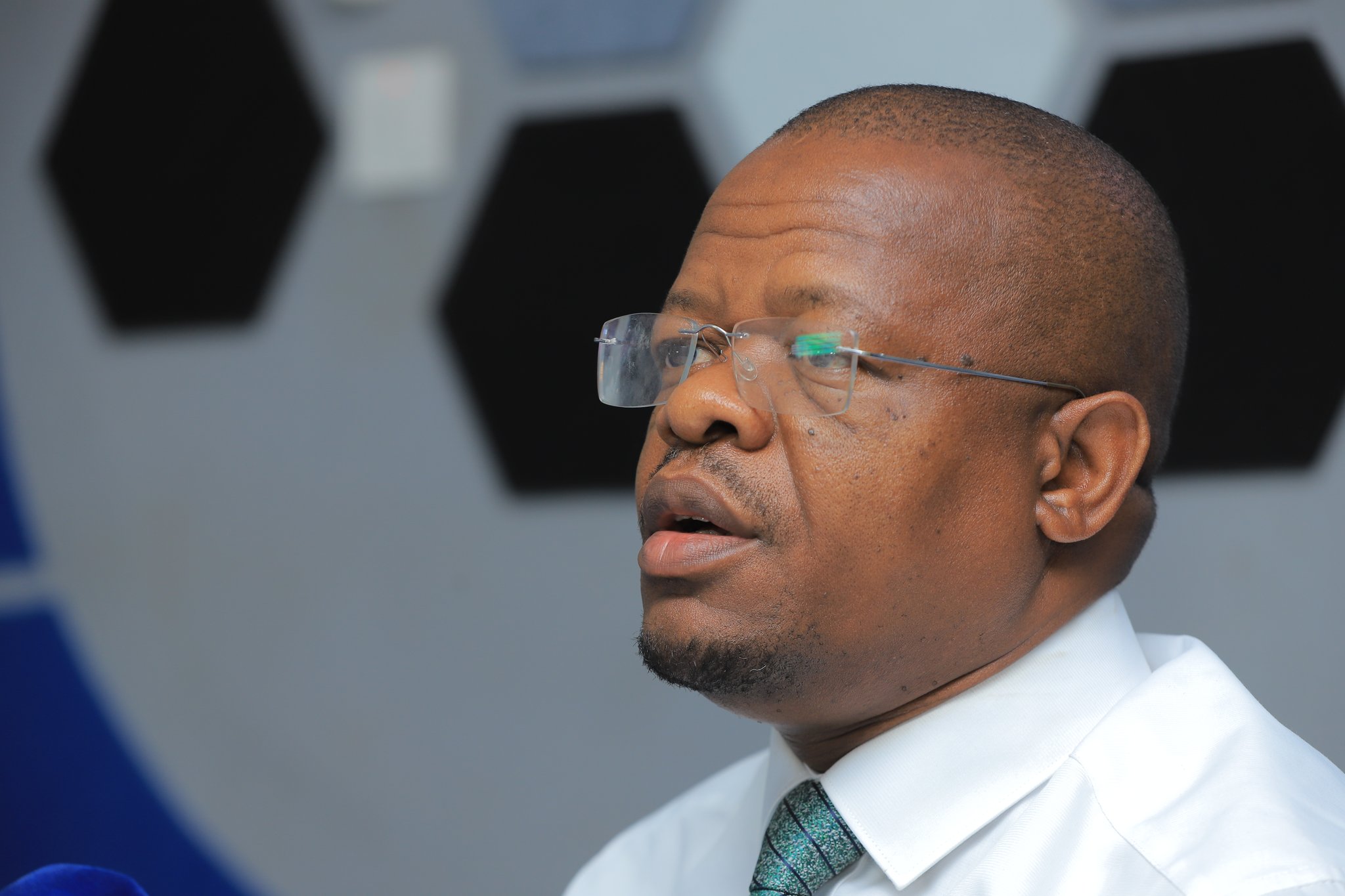
Magogo says AFCON 2027 hosting is defining moment of his FUFA tenure

Photo Credit: FUFA Media

Magogo says AFCON 2027 hosting is defining moment of his FUFA tenure

FUFA president Moses Magogo has described Uganda’s successful bid to host the Africa Cup of Nations 2027 as the most powerful and emotional moment of his entire journey in football administration, saying no other achievement comes close to it.

Magogo was speaking after the CAF flag was officially handed over to the PAMOJA hosts following the AFCON 2025 final in Morocco. Writing from Rabat, he revealed that the significance of the moment only truly sank in during the early hours of January 19, 2026.

“In the wee hours of the morning of 19th January 2026, in the chilly weather of Rabat, I kept turning in my bed, coming to terms with the fact that despite all the milestones we have achieved, none compares to this,” Magogo said.

Reflecting on his tenure at the helm of FUFA, Magogo pointed to several historic strides Uganda has made in recent years.

These include the return of the Uganda Cranes to the Africa Cup of Nations after a 40-year absence and qualifying for the tournament four times in a decade, as well as guiding the Crested Cranes back to the Women’s Africa Cup of Nations after 22 years.

Magogo on FUFA’s role in driving government investment

He also highlighted the federation’s structural and commercial growth, including the construction of a FUFA-owned stadium approved for CAF Category Four matches and the launch of FUFA’s own television and FM radio platforms that now broadcast Uganda Premier League football.

Uganda’s rising profile in youth football also featured prominently in his reflections, with two U20 AFCON appearances and the U17 team making history by reaching the country’s first-ever FIFA World Cup.

Magogo further noted that hosting CHAN marked Uganda’s maiden continental tournament, while legislative milestones such as securing direct government funding for national teams and the passing of the 2023 National Sports Act strengthened the sport’s foundation.

On infrastructure, Magogo cited FUFA’s role in driving government investment in Namboole, Hoima and Aki Bua stadiums, the development of more than twelve training facilities, and the federation’s donation of 24 acres of land for the Hoima Stadium project.

He also mentioned the introduction of medical insurance for players and referees and the stabilisation of football governance structures.

Yet, despite all these achievements, Magogo insisted that none carries the same emotional weight as hosting Africa’s biggest football tournament.

“None of the above makes me as emotional as realising the dream of bringing AFCON to Uganda in my lifetime,” he said.

He concluded with a message of unity and hospitality, calling on Ugandans to rally together as the country prepares to welcome Africa — and the world — to East Africa for AFCON 2027.

Un moment historique vécu dans l’intimité

S’exprimant depuis Rabat, au Maroc, après la remise officielle du drapeau de la CAF aux pays hôtes à l’issue de la finale de l’AFCON 2025, Magogo a confié que la portée réelle de cet accomplissement ne s’est imposée à lui que quelques heures plus tard, dans la solitude de la nuit.

« Aux premières heures du 19 janvier 2026, dans le froid de Rabat, je n’arrivais pas à dormir. Je me rendais compte que malgré tous les jalons franchis au fil des années, rien n’était comparable à cela », a-t-il écrit.

Pour le dirigeant ougandais, cet instant marque l’aboutissement d’un rêve nourri depuis plusieurs décennies, tant à titre personnel qu’au nom du football national.

Un bilan riche sous sa présidence

Revenant sur son parcours à la tête de la FUFA, Moses Magogo a rappelé plusieurs avancées majeures enregistrées sous son mandat. Parmi elles figure le retour tant attendu des Uganda Cranes à la Coupe d’Afrique des Nations après 40 ans d’absence, suivi de quatre qualifications en dix ans, un exploit inédit dans l’histoire du pays.

Il a également souligné le retour des Crested Cranes à la Coupe d’Afrique des Nations féminine après 22 années d’attente, signe du développement progressif du football féminin ougandais.

Croissance structurelle et commerciale du football ougandais

Au-delà des résultats sportifs, Magogo a mis en avant la transformation institutionnelle de la FUFA. Celle-ci inclut notamment la construction d’un stade appartenant à la fédération, homologué pour les rencontres CAF Catégorie Quatre, ainsi que le lancement de plateformes médiatiques propres à la FUFA — une chaîne de télévision et une radio FM — qui diffusent désormais les matches de la Uganda Premier League.

Ces initiatives ont permis d’accroître la visibilité du championnat local, de renforcer sa valeur commerciale et d’améliorer les revenus générés pour les clubs et les acteurs du football national.

L’essor du football des jeunes

Le développement du football des jeunes occupe également une place centrale dans le bilan dressé par Magogo. L’Ouganda a pris part à deux CAN U20, tandis que l’équipe U17 a écrit une page d’histoire en se qualifiant pour la première Coupe du monde FIFA de l’histoire du pays dans cette catégorie.

Selon Magogo, ces progrès sont le fruit d’investissements ciblés dans la formation, la détection des talents et la structuration des compétitions de jeunes.

Infrastructures et réformes législatives

Sur le plan des infrastructures, le président de la FUFA a rappelé le rôle moteur de la fédération dans la mobilisation de fonds publics pour la rénovation et la construction de stades clés, notamment Namboole, Hoima et Aki Bua. Il a également mentionné le développement de plus de douze centres d’entraînement à travers le pays et le don par la FUFA de 24 acres de terrain pour le projet du stade de Hoima.

Magogo a aussi salué des avancées institutionnelles majeures, telles que l’obtention de financements directs du gouvernement pour les équipes nationales et l’adoption du National Sports Act de 2023, qui a renforcé le cadre légal et la gouvernance du sport en Ouganda. L’introduction d’une assurance médicale pour les joueurs et les arbitres fait également partie de ces réformes structurantes.

Leave a Reply

Your email address will not be published.

Recent Post

No recommended posts at this time.