
Martin T
December 20, 2025CAF president Motsepe announces record $10m windfall for AFCON winners
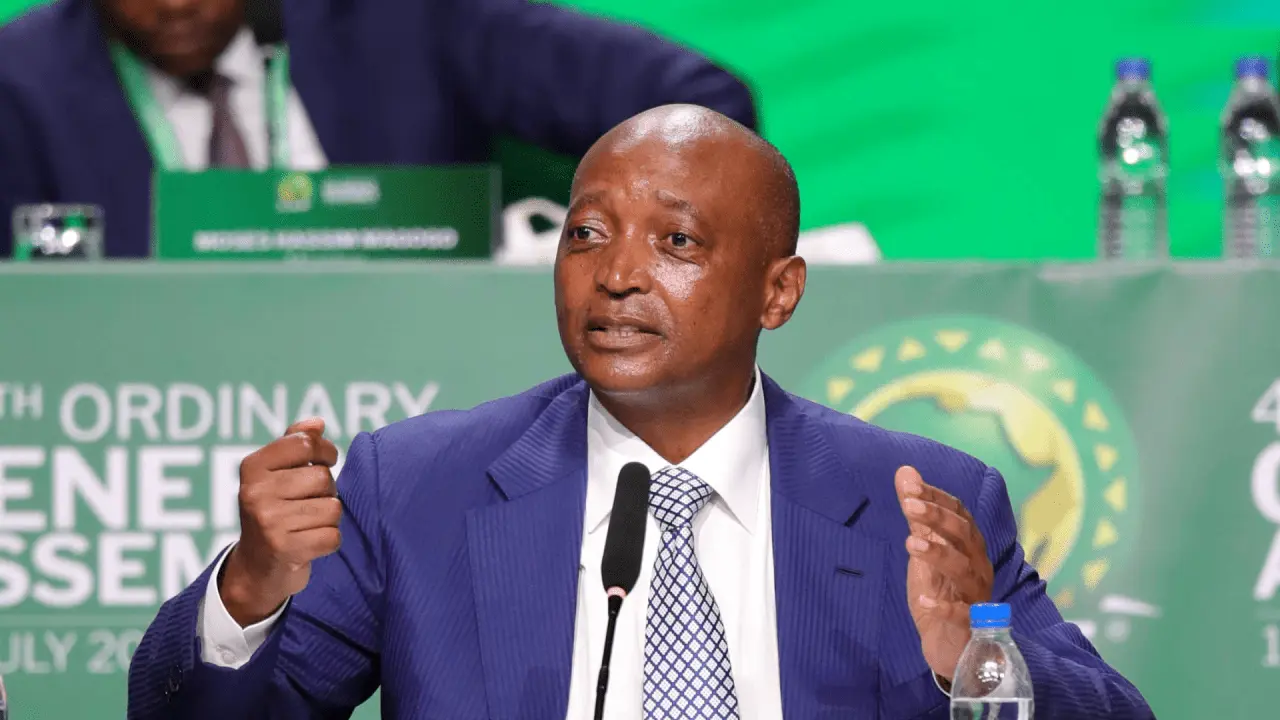
Patrice Motsepe. Photo credit: CAF
CAF president Motsepe announces record $10m windfall for AFCON winners
On the eve of the 2025 Africa Cup of Nations (AFCON) kick-off, CAF president Dr Patrice Motsepe has signalled a new era for African football, anchored by a record-breaking financial windfall and a fundamental restructuring of the continental schedule.
Addressing a packed media briefing at the Moulay Abdellah Stadium in Rabat on Saturday, Motsepe confirmed that the winners of the Morocco 2025 edition will take home a staggering US$10 million (approximately R167 million). This represents a 43% increase from the $7 million awarded to Ivory Coast in 2023, and more than double the prize pool of just three years ago.
The Push for Financial Sovereignty
The prize money hike is a central pillar of Motsepe’s “self-sustainability” agenda. By aggressively increasing the commercial value of CAF’s flagship property, the administration aims to professionalise the sport across all 54 member associations.
“It was less than $5 million before the 2023 edition,” Motsepe noted. “We will continue to increase the prize money for the most important competition in Africa. If you win, you get $10 million—that is the key objective as we move forward.”
This financial injection is not restricted to national teams. Motsepe confirmed that significant increases are also coming for the CAF Champions League and CAF Confederation Cup in 2026. While the specific figures remain under wraps until the new year, the president hinted at a transformative update to the interclub reward structure.
A New Era: The Four-Year Cycle
Beyond the finances, Motsepe dropped a “media bomb” regarding the future of the tournament itself. In a move to align with international standards and ease the perennial “club vs. country” friction with European teams, AFCON will transition from a biennial to a four-year cycle starting after 2028.
AFCON 2027: To be co-hosted by Uganda, Kenya, and Tanzania.
AFCON 2028: A “bridge” tournament to facilitate the transition.
The Future: Following 2028, the tournament will be held in 2032 and 2036.
To fill the gaps in the calendar, CAF is expected to introduce a new “League of African Nations” concept, inspired by the UEFA model, ensuring competitive continental football remains an annual fixture during FIFA international windows.
Morocco Takes the AFCON Stage
The announcements come just 24 hours before host nation Morocco faces Comoros in the tournament opener on Sunday, December 21. While Ivory Coast arrives as the defending champions, the focus in Rabat is firmly on the future—one that Motsepe believes will finally see African football command the global respect and revenue it deserves.