
Martin T
December 16, 2025The 2025 AFCON: Everything you need to know about Africa’s showpiece
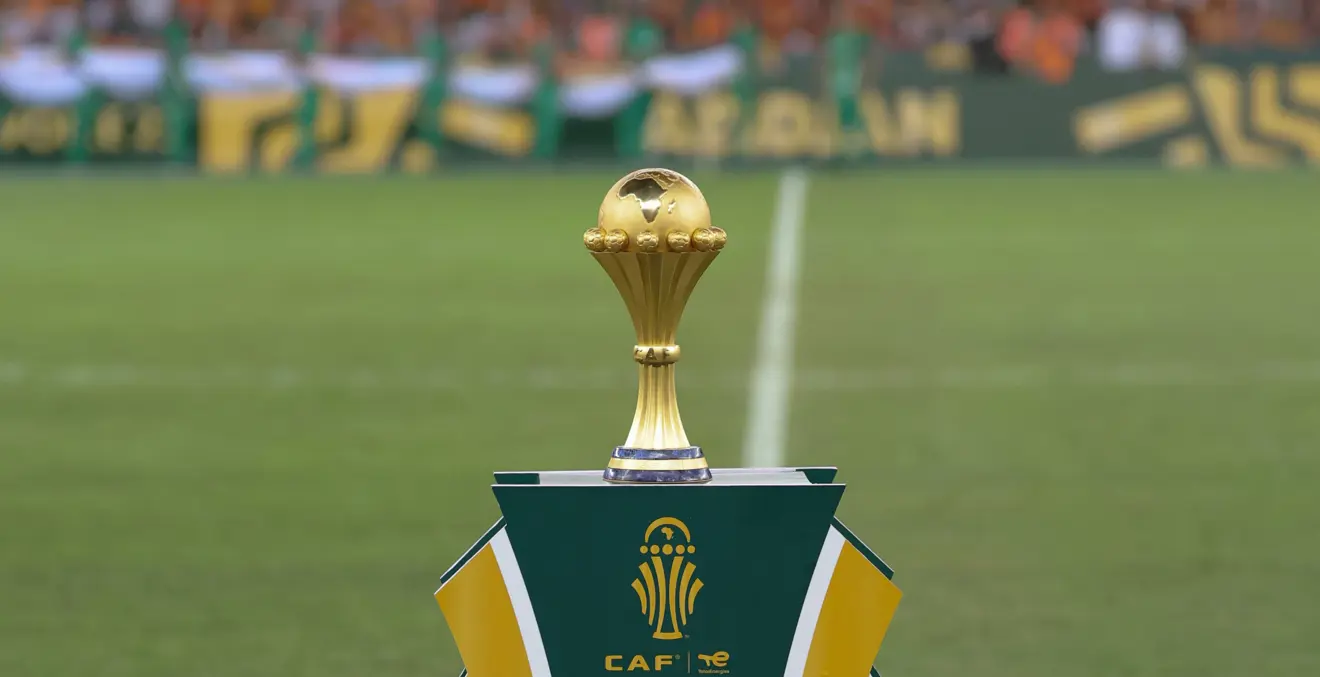
The AFCON trophy. Photo credit: CAF
The 2025 AFCON: Everything you need to know about Africa’s showpiece
The Africa Cup of Nations (AFCON) is more than just a football tournament—it is a festival of colour, culture, and continental pride. As the continent prepares for the 35th edition of its premier men’s football competition, anticipation is soaring.
AFCON 2025 promises to be a landmark event, set against the dramatic backdrop of Morocco’s majestic landscapes and vibrant cities from 21 December 2025 to 18 January 2026.
A Festival Like No Other
The stage is set in Morocco, a country with a rich footballing heritage and a burning desire to showcase itself ahead of co-hosting the 2030 FIFA World Cup. The AFCON will unfold across nine venues in six cities—the most extensive geographic spread in the tournament’s history—with Rabat, the capital, at the heart of the action. The Prince Moulay Abdellah Stadium, gleaming after recent renovations, will host both the opening fixture and the grand finale.
This year’s tournament is historic for several reasons. For the first time ever, AFCON will run across Christmas and New Year, moved from its traditional June–July slot due to the expanded FIFA Club World Cup. The timing not only presents a new challenge for players and fans but also creates an even more festive atmosphere that will blend Africa’s love for football with the global holiday spirit.
There’s more at stake than continental glory. Seven of Africa’s nine confirmed 2026 FIFA World Cup teams will use the tournament as a dress rehearsal for the global stage in the USA, Canada, and Mexico next summer. For Morocco, AFCON 2025 is also a crucial test run for 2030, when it will share hosting duties with Portugal and Spain for the centenary World Cup.
The 2025 AFCON Mascot and the Anthem
Every AFCON has its symbols, but few are as evocative as Assad, the official mascot for 2025. Assad, a spirited young lion inspired by the legendary Atlas lion, embodies the strength, pride, and unity of Moroccan heritage and African football. With his lively energy, Assad aims to connect fans from every corner of the continent and the diaspora.
AFCON’s official song, always a highlight, is set for release just before the opening match. If tradition is any guide, expect an infectious anthem that blends pan-African rhythms and voices, filling stadiums and living rooms with the sound of unity and celebration.
The Road to Glory—Key Dates
The tournament’s structure promises high drama from start to finish. Clubs will release their players on 15 December, with group matches running from 21 to 31 December. The round of 16 follows from 3 to 6 January, then quarter-finals on 9–10 January, semi-finals on 14 January, the third-place play-off on 17 January, and the final on 18 January, all times local (UTC).
The Groups: Old Rivals, New Contenders
Twenty-four teams, split into six groups, will vie for the right to be crowned kings of African football:
- Group A: Morocco (hosts), Mali, Zambia, Comoros
- Group B: Egypt, South Africa, Angola, Zimbabwe
- Group C: Nigeria, Tunisia, Uganda, Tanzania
- Group D: Senegal, DR Congo, Benin, Botswana
- Group E: Algeria, Burkina Faso, Equatorial Guinea, Sudan
- Group F: Ivory Coast (holders), Cameroon, Gabon, Mozambique
The group stage schedule has served up tantalising matchups. The curtain-raiser sees hosts Morocco face Comoros under the floodlights of Rabat. Defending champions Ivory Coast, five-time winners Cameroon, and perennial giants like Egypt, Nigeria, and Senegal will all look to stamp their authority early.
Star Power: Players and Teams to Watch
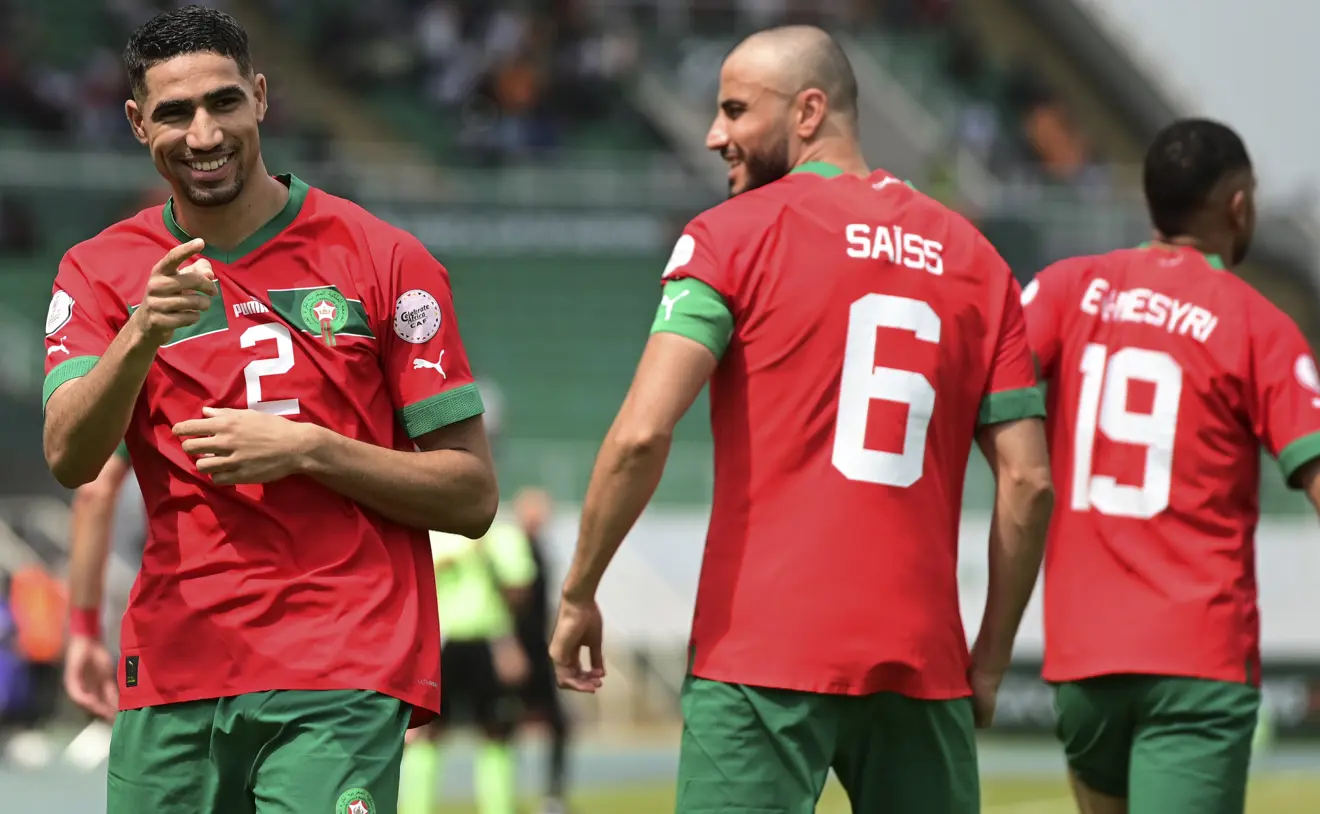
Morocco’s Atlas Lions are under the spotlight, riding a world-record 18-game winning streak and boasting a squad hailed as their golden generation. The memory of their 1976 triumph lingers, while the pain from a shock exit at the last AFCON remains raw. All eyes are on Achraf Hakimi, the dynamic Paris Saint-Germain (PSG) defender and reigning African Footballer of the Year, racing against time to recover from injury. Coach Walid Regragui’s ambitions are clear: nothing less than lifting the trophy on home soil will suffice.
Nigeria, three-time champions, arrive with a point to prove after missing out on successive World Cups. Recent heartbreak in Côte d’Ivoire still stings, and with captain William Troost-Ekong now retired, the mantle has passed to Victor Osimhen and Ademola Lookman. For Nigeria, only ultimate victory will ease the pain of recent setbacks.
Senegal, champions in 2021, are another hot favourite. With stars like Sadio Mané, Kalidou Koulibaly, and Idrissa Gana Gueye, the Teranga Lions possess the defensive steel and attacking flair to go all the way. In Group D, they face DR Congo, who have a shot at their first World Cup in half a century.
Defending champions Ivory Coast, under the stewardship of Emerse Faé, hope to ride the momentum of their recent fairytale run. Inspired by Amad Diallo, they are unbeaten in World Cup qualifying and eager to add a fourth AFCON title to their haul.
Egypt, the most decorated nation with seven titles, are led by the indomitable Mohamed Salah. At 33, the Liverpool legend is desperate to end his AFCON drought, having lost two finals. Supported by the likes of Manchester City’s Omar Marmoush, Salah’s quest has become a national obsession.
Cameroon’s build-up has been dramatic. The federation, led by legend Samuel Eto’o, replaced their coach and controversially omitted key players, including André Onana and Vincent Aboubakar. Manchester United’s Bryan Mbeumo now carries their hopes.
South Africa, buoyed by a third-place finish last time, and former champions Algeria and Tunisia, round out a field brimming with talent and ambition.
Premier League Exodus
Fans of English football will feel AFCON’s impact as stars like Salah, Mbeumo, Amad Diallo, and Mazraoui depart for Morocco, missing up to seven Premier League fixtures. Sunderland are particularly hard hit, with seven players away.
How to Watch: A Global Spectacle
AFCON 2025 will be broadcast in over 30 countries, with SuperSport covering sub-Saharan Africa, beIN Sports serving the MENA region and the US, and Channel 4 airing the action in the UK and Ireland. From the bustling streets of Lagos to the cafes of Paris, millions will be glued to their screens.
The Magic of AFCON
AFCON has a magical unpredictability—seven different winners in the last eight editions. The tournament is alive with colour: dazzling kits, thunderous drums, and the hopes of nations. Who will lift the trophy this time? Will Morocco’s golden generation fulfil their destiny, or will another nation write a new chapter in African football history?
One thing is certain: from the first whistle in Rabat to the final roar of the crowd, AFCON 2025 will be a month-long celebration of African excellence, unity, and footballing brilliance.
The ultimate 2025 AFCON guide: https://www.cafonline.com/media/05ebfeih/ultimate-media-guide-afcon25.pdf