
Ronald Lusulire
February 20, 2026UPDF kicks off major upgrade of AFCON 2027 training grounds across Uganda
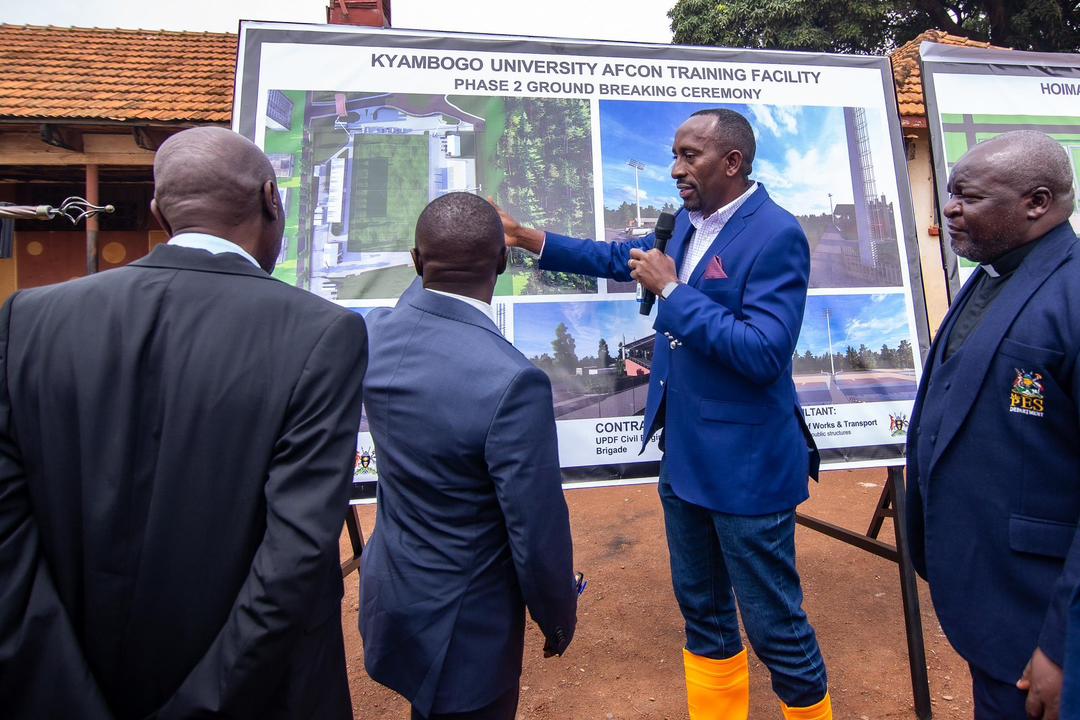
Photo: National Council of Sports Media
UPDF kicks off major upgrade of AFCON 2027 training grounds across Uganda
Preparations for the 2027 Africa Cup of Nations (AFCON) have gathered momentum as the Uganda People’s Defence Forces (UPDF) Engineering Brigade officially commenced construction and rehabilitation works on designated AFCON training pitches across the country.
The handover ceremony for the first set of facilities was held at Makerere University, where the State Minister for Sports, Peter Ogwang, represented the Minister of Education and Sports, Janet Museveni.
Today, on behalf of the Minister of Education & Sports Maama @JanetMuseveni, I officially commissioned the construction of the @Makerere AFCON Training Ground Facility. A facility with all others that won’t be only for football but will have a running track and other courts for… pic.twitter.com/BWJIS5ceBL
— Peter Ogwang (@OgwangOgwang) February 19, 2026
The event marked the formal commissioning of Makerere’s AFCON Training Ground Facility ahead of next year’s continental tournament.
Speaking at the function, Ogwang said the upgraded Makerere facility would be a multi-sport complex. In addition to football, it will feature a running track and courts for volleyball, netball, and basketball. He also presided over groundbreaking ceremonies for other AFCON training sites, including Lira University, Pece, Kyambogo Phase Two, Hoima Booma Grounds, and Masindi Municipal Council facilities.
In total, the UPDF Engineering Brigade will undertake works on seven venues: Makerere University ground, Pece Stadium, Lira University, Gulu University, Hoima Booma Grounds, Masindi Municipal Council Stadium, and Phase Two of the Kyambogo University training facility.
The works are under the command of Lt. Col. Peter Sseku Kidemuka and are expected to be completed within eight months.
Government funding for the projects is substantial. Kyambogo University will receive Shs19 billion for Phase Two developments, which include tennis and basketball courts as well as a pavilion.
Hoima, Gulu, Lira, Sir Tito Winy, and Pece facilities will each cost Shs 13.2 billion ($3,676,068), while Masindi Municipal Council Stadium will take Shs 20.2 billion ($5,625,498), with an athletics running track included.
All training pitches will be fitted with hybrid grass similar to that at Mandela National Stadium and Kyambogo University ground, in line with Confederation of African Football standards.
Uganda is set to co-host the tournament alongside Tanzania and Kenya between June and July next year. Confederation of African Football had committed to staging AFCON in mid-year starting from 2019, although the last three editions were played between January and February or December and January.
Holding the tournament during the European club season has previously sparked disputes over player release, prompting CAF to confirm that AFCON will shift to a four-year cycle starting in 2028, ending its long-standing biennial format.